What Are The Benefits Of Eating Fermented Foods?
A complete guide to what fermented food does for you — preservation without power, easier digestion, minerals unlocked, vitamins created, and the live bacteria question. Plus the claims that do not hold up, and who should be careful.
People arrive at fermenting from two directions. Some want the health benefits. Others have too much cabbage and nowhere to put it.
Both are good reasons, and they lead to the same place. This guide covers what you get, sorted by how well established each claim is, followed by a food-by-food breakdown, the claims that do not survive scrutiny, and who should take care.
First, what fermenting actually is
Fermenting is controlled spoilage. You create conditions where the microbes you want thrive and the microbes you do not want cannot. They eat the sugars and starches in the food and produce acid, alcohol or gas as waste. That waste changes the food, and it also protects it.
There are four main kinds, and they behave differently enough that it matters which one you are dealing with.
Lactic acid fermentation
Bacteria of the Lactobacillus family and their relatives eat sugars and produce lactic acid. This is sauerkraut, kimchi, yoghurt, kefir, real dill pickles, sourdough and most traditional vegetable preserving.
You do not add the bacteria to vegetables. They are already on the leaves. Salt and the absence of oxygen simply give them the advantage over everything else growing there.
Alcoholic fermentation
Yeasts eat sugars and produce alcohol and carbon dioxide. This is beer, wine, cider, mead and the rise in bread. Yeast is doing the work, not bacteria.
Acetic acid fermentation
Bacteria of the Acetobacter family convert alcohol into acetic acid. This is vinegar, and it needs air rather than the absence of it. It is a second stage: something must be alcoholic before it can become vinegar.
Mould and mixed cultures
Some ferments use fungi deliberately. Aspergillus oryzae makes koji, which makes miso, soy sauce and sake. Rhizopus makes tempeh. Blue and white cheese moulds are the same idea. Kombucha and water kefir use a mixed community of yeasts and bacteria working together.
Most of the health benefits below come from the lactic acid group. That is also the group you can do at home with no equipment.
Why almost every culture does this
Fermenting is not a health trend. It is one of the oldest food technologies there is, and it appears independently almost everywhere people settled.
Residue analysis puts fermented drink in Chinese pottery around 7000 BC. Bread and beer show up together in Egypt. Cheese-making equipment appears in Poland around 5500 BC. Korean kimchi, German sauerkraut, Japanese miso, Indian idli, Ethiopian injera, Andean chicha, West African ogi — every one of them is the same idea reached separately.
The reason is that before refrigeration there were only four ways to keep food: dry it, salt it, freeze it if the climate allowed, or ferment it. Fermenting was the only one that worked everywhere, cost nothing, and improved the food rather than merely holding it still.
It also solved a specific problem that dominated pre-modern life: the gap between harvest and spring. A field of cabbage comes in over three weeks in October and is inedible by November. Fermented, it feeds you until April. Whole cuisines are built around that single fact.
Then it largely stopped. Refrigeration, canning and industrial food supply removed the need within about two generations. Pasteurisation, which is genuinely one of the great public health measures, also killed the live cultures in the commercial versions that survived. By the 1970s most people in Britain and America ate almost nothing that was still alive.
What came back is not quite the old thing. The traditional version was about not starving. The modern version is about health, flavour and self-reliance. Those are better problems to have, but it is worth remembering that the practice was refined over thousands of years by people who could not afford to get it wrong.
That history is also the best argument for the safety of the method. Lacto-fermentation has been fed to billions of people over millennia. The failure modes are well understood and easy to recognise.
What happens inside the jar
Understanding the sequence makes the whole thing far less mysterious, and it explains most of the advice you will be given.
The first three days
You have salted the cabbage and pushed it under its own brine. Oxygen is used up quickly by whatever is left in the jar. The bacteria that need it die back.
Leuconostoc mesenteroides takes over first. It is salt-tolerant, works in the cold and produces carbon dioxide alongside its acid. This is the stage where the jar fizzes and bubbles push to the surface. It drops the pH from around 6.0 to about 4.5 and, in doing so, makes the environment hostile to itself.
Week one to three
Lactobacillus plantarum and its relatives take over. They tolerate more acid than Leuconostoc and keep working after it has stopped. They push the pH down to around 3.4 and hold it there.
This is the stage that does the preserving. Below pH 4.6 nothing dangerous grows. Clostridium botulinum, listeria, salmonella and E. coli are all excluded. The food is now safe in a way that raw cabbage never was.
After that
Activity slows. Flavour keeps developing for months. In a cold place the ferment more or less holds; in a warm one it slowly softens and sours further.
Why salt, and why that much
Two per cent by weight is the standard for a reason. Salt pulls water out of the cabbage to make the brine, and it slows down the spoilage organisms more than it slows the lactobacilli. That head start is the whole trick.
Below about 1.5 per cent you lose the advantage and the ferment becomes unreliable and soft. Above about three per cent the lactobacilli themselves struggle and it takes forever. Two per cent is where the tradition settled, and the tradition is right.
Weigh it. Do not guess by volume — coarse and fine salt differ enormously by the spoonful. Use salt with no anti-caking agent or iodine, both of which can interfere.
Why temperature matters
Around 18 to 22°C is the sweet spot for vegetables. Warmer and it goes fast, softens, and tastes flatter. Colder and it takes much longer but develops better flavour and stays crisper. A cool larder beats a warm kitchen every time.
Why everything must stay submerged
The protection is the brine. Anything sitting above it is in open air, and open air grows mould. This single rule accounts for almost every failed ferment. Weigh the food down, top up with a two per cent brine if the level drops, and check it weekly.
Things I would state as fact
These are well documented, uncontroversial and not in dispute.
Food that keeps without electricity
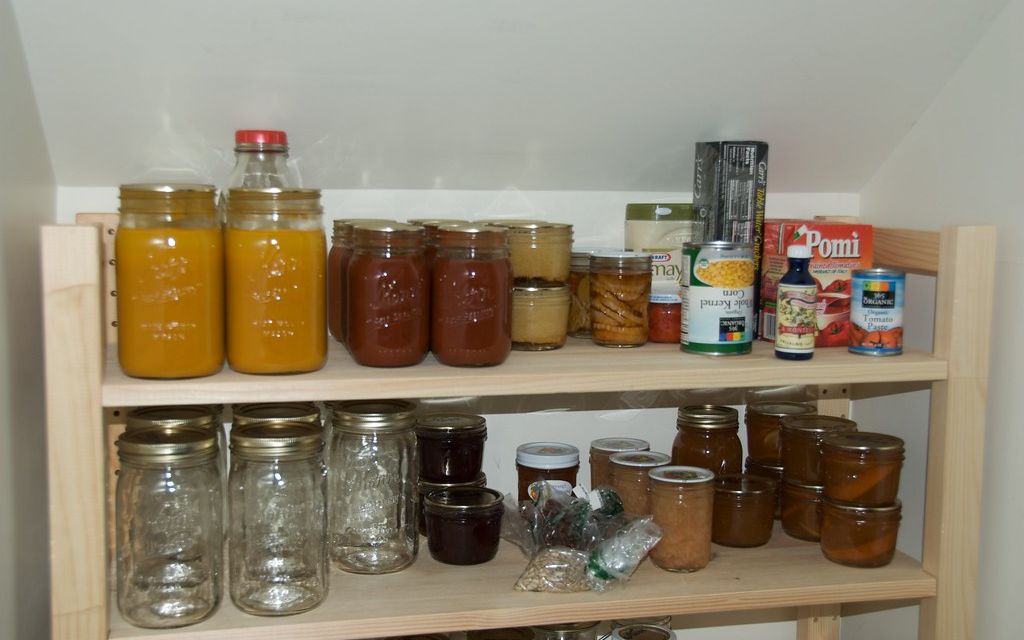
A crock of sauerkraut in a cold cellar keeps all winter. No freezer, no jars, no pressure canner, no fuel, no running cost.
The mechanism is simple. The bacteria drop the pH of the food below about 4.6, and at that acidity the organisms that cause food poisoning cannot grow. Clostridium botulinum, the one that matters most, stops at around pH 4.6. A finished sauerkraut sits nearer pH 3.4. It is not close.
For anyone growing their own, this is the benefit that changes how the year works. It turns an autumn glut into February food. A row of cabbage that would rot in three weeks becomes six months of vegetables.
It also works when the power does not. A freezer full of food is a liability in a long outage. A crock in a cellar is not.
Lactose broken down
The bacteria in yoghurt and kefir consume much of the lactose in milk as they work. A long-fermented yoghurt or a mature kefir contains substantially less lactose than the milk it was made from.
The bacteria also carry their own lactase enzyme, and some of that survives into your gut and keeps working there. This is why many people who cannot drink milk eat yoghurt without trouble. It is well documented rather than folklore, and the European Food Safety Authority has accepted the claim for live yoghurt cultures.
Hard cheese goes further. Most of the lactose leaves in the whey, and what remains is consumed during ageing. A well-aged cheddar or parmesan contains almost none.
Minerals actually absorbed
Grains, pulses, nuts and seeds contain phytic acid. Phytic acid binds iron, zinc, calcium and magnesium and carries them straight through you unabsorbed. The mineral is on the label. It is not in you.
Fermenting breaks phytic acid down. The bacteria and the grain's own phytase enzyme both do it, and acidity speeds the process. Long sourdough fermentation does it in bread. Soaking and souring does it in pulses. Tempeh and miso do it in soya.
The size of the effect depends on time and acidity, but the direction is not in question. A slow sourdough leaves you with meaningfully more available iron and zinc than a fast commercial loaf made from the same flour.
This matters most for people who eat a lot of wholegrain and pulses, which is most people who grow their own food. Wholemeal flour contains more phytic acid than white, so the loaf that looks healthier can deliver fewer minerals unless you ferment it properly.
More B vitamins than you started with
Microbes manufacture vitamins as a by-product of their own metabolism, and you get the benefit. Fermenting can leave a food containing more vitamin than the raw ingredient did.
B vitamins are the main case, including folate and, in some ferments, B12. Vitamin K2 is the other. K2 directs calcium into bone rather than into arteries, and it is scarce in most diets. Natto, the Japanese fermented soya bean, is the richest food source known. Aged cheese and some fermented sausage carry useful amounts.
Vitamin C is a different case. Fermenting does not create it, but it preserves it. It survives fermenting far better than it survives boiling, which is why barrels of sauerkraut went to sea for centuries and why Captain Cook's crews did not get scurvy.
Compounds made more active
Some ferments do not just preserve nutrients, they convert compounds into more useful forms.
Cabbage and its relatives contain glucosinolates. Fermenting converts them into isothiocyanates, which are the compounds behind most of the research interest in brassicas. Sauerkraut carries these in a more available form than raw cabbage.
Fermented dairy produces bioactive peptides as the bacteria break milk protein apart. Some of these have measurable effects on blood pressure in trials. The effect is modest, but it is real and it is specific to the fermented product.
Soya is the clearest example. The isoflavones in soya are poorly absorbed in their bound form. Fermenting into miso, tempeh or natto frees them.
Flavour
Not a health benefit, but the reason most people keep doing it once they start.
Fermenting builds sourness, savouriness and depth that no other process produces. Bacteria and moulds break proteins into free amino acids, and glutamate — the umami compound — is one of them. That is why aged cheese, soy sauce, miso, fish sauce and cured ham all taste of the same underlying thing.
Cheese, bread, wine, vinegar, soy sauce, chocolate, coffee, tea, cured meat, beer. Almost everything humans find delicious has been fermented by somebody.
Things that look likely but are not settled
This is where most of the marketing lives, so it is worth being careful.
The gut bacteria question
The claim is that eating live fermented food improves the community of bacteria in your gut, and that this improves your health.
The first half is reasonably supported. The best single piece of evidence is a Stanford trial published in 2021, which put people on either a high-fibre diet or a fermented-food diet for ten weeks. The fermented-food group showed increased microbial diversity and reduced markers of inflammation. The high-fibre group did not, at least not in that timeframe.
That is a real, controlled result and it is worth taking seriously. It is also one study, in a small group, over ten weeks.
The second half — that a more diverse gut community makes you healthier in ways you would notice — is plausible and widely believed but much less firmly established. Diversity correlates with health outcomes. Whether it causes them is a harder question, and the honest answer is that we do not yet know.
What "live bacteria" actually does
There is a common misunderstanding worth clearing up. Most bacteria from fermented food do not take up permanent residence in your gut. They pass through.
Stop eating them and they mostly disappear within a couple of weeks. This is not a failure — a passing bacterium still interacts with your gut lining and immune system on the way through, and still produces compounds while it is there. But it does mean the benefit is maintained by continued eating, not banked by a course of treatment.
It also means the word "probiotic", which properly means a specific strain at a specific dose shown to do a specific thing, is being used far more loosely than it should be. A jar of sauerkraut is not a probiotic in that sense. It is a food containing live bacteria, which is a different and vaguer claim.
Immune function
Most of the immune system sits in the gut wall. Live bacteria interact with it. Several trials show modest reductions in the length or frequency of common colds with specific probiotic strains.
Whether eating sauerkraut does the same thing is an extrapolation. The strains are different, the dose is uncontrolled and nobody has run the trial.
Mood
The gut-brain link is real. The vagus nerve connects the two, gut bacteria produce neurotransmitters, and the field is active and well funded.
Nothing in it yet supports telling someone that eating kefir will improve their mood. Some small trials point that way. The effect sizes are small and the results are inconsistent. Treat this as interesting, not as advice.
A food-by-food guide
Different ferments deliver different things. Here is what each one is actually good for.
Sauerkraut
Cabbage, salt, time. Nothing else. Around two per cent salt by weight, submerged under its own brine, three to six weeks in a cool place.
Gives you: vitamin C, vitamin K, isothiocyanates from the cabbage, fibre, live bacteria in large numbers, and food that keeps for months.
Worth knowing: almost all supermarket sauerkraut is pasteurised, which kills every bacterium in it. Check the chilled section and look for the word unpasteurised. The stuff in a tin on the ambient shelf is a vegetable, not a live food.
Kimchi
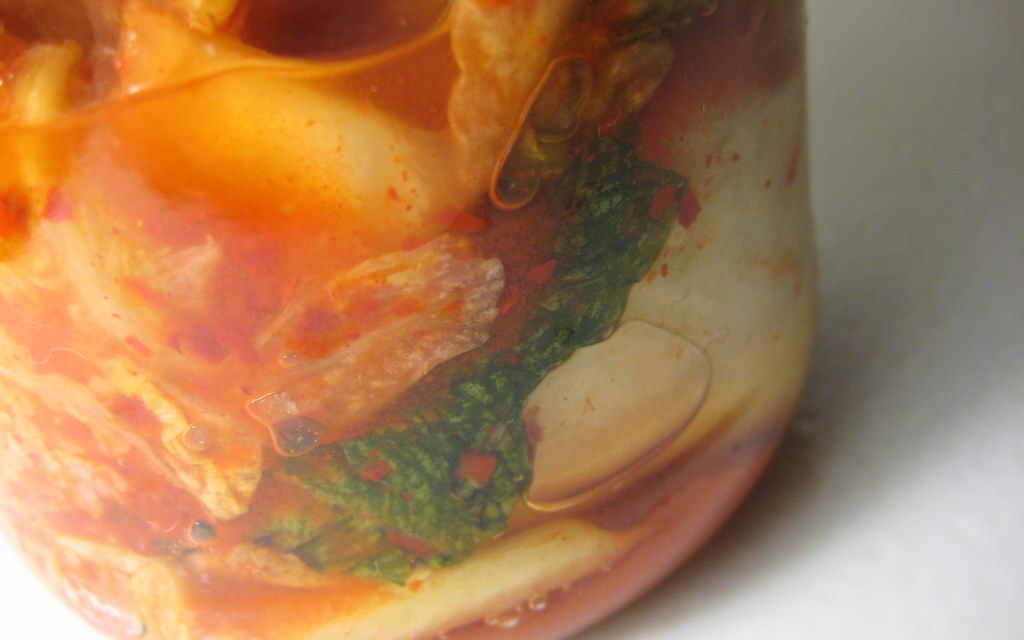
The same process as sauerkraut with chilli, garlic, ginger and usually fish sauce or shrimp paste. Napa cabbage rather than the tight round sort.
Gives you: everything sauerkraut does, plus capsaicin, garlic and a wider bacterial mix. It ferments faster and is usually eaten younger.
Worth knowing: traditional kimchi is not vegetarian. Versions without the fish are easy to make and easy to buy, but read the label.
Yoghurt
Milk plus two bacterial strains, held warm for several hours.
Gives you: reduced lactose, protein in a more digestible form, calcium, B vitamins and live bacteria. The best-evidenced of all fermented foods, because it has been studied the most.
Worth knowing: flavoured yoghurt is often mostly sugar. A fruit yoghurt can carry as much sugar as a soft drink. Buy plain and add your own fruit.
Kefir
Milk fermented with kefir grains — a rubbery cluster of bacteria and yeasts that you keep and reuse indefinitely.
Gives you: a far wider range of organisms than yoghurt, typically dozens of species rather than two. Lower lactose again. Slightly fizzy and slightly alcoholic, under one per cent.
Worth knowing: this is the cheapest live food there is. The grains grow, so one set feeds you forever and gives you spares to hand on. If you only do one thing from this list, do this.
Water kefir
Different grains, sugar water instead of milk. Dairy-free.
Gives you: live bacteria and yeasts in a light fizzy drink. Fewer organisms than milk kefir and none of the dairy nutrition.
Worth knowing: how much sugar remains depends entirely on how long you leave it. A short ferment is a sugary drink.
Sourdough
Flour and water, left to attract wild yeasts and lactobacilli, then used to raise bread over many hours.
Gives you: broken-down phytic acid and therefore more available minerals. Partly broken-down gluten. A lower blood-sugar response than fast-raised bread. Better keeping quality, because the acid slows mould.
Worth knowing: the baking kills every organism in it. Sourdough is not a live food. Its benefits come from what the fermentation did to the flour before the oven, and those benefits need a genuinely long ferment. A loaf labelled sourdough that was raised in two hours with added baker's yeast gives you none of this.
Miso
Soya beans, salt and koji mould, aged for months or years.
Gives you: freed isoflavones, deep umami, B vitamins, live bacteria in unpasteurised versions.
Worth knowing: it is very salty. And boiling it kills the organisms, so stir it into soup off the heat if that matters to you.
Tempeh
Whole soya beans bound into a cake by Rhizopus mould.
Gives you: complete protein, reduced phytic acid, freed isoflavones, and far better digestibility than plain cooked soya.
Worth knowing: it is cooked before eating, so not a live food. Excellent protein regardless.
Natto
Soya beans fermented with Bacillus subtilis. Sticky, stringy and pungent.
Gives you: by a wide margin the richest known food source of vitamin K2. Also nattokinase, an enzyme with genuine research behind it.
Worth knowing: most Westerners find it difficult. It is the single most nutritionally interesting ferment on this list and the hardest to enjoy.
Kombucha
Sweet tea fermented with a mixed culture of bacteria and yeast.
Gives you: live organisms, acetic and gluconic acids, tea polyphenols, and a small amount of alcohol.
Worth knowing: the health claims made for kombucha run well ahead of the evidence. Commercial kombucha often has sugar added after fermenting. It is a pleasant drink with modest benefits, not a tonic.
Real pickles
Cucumbers in salt brine, fermented. Not cucumbers in vinegar.
Gives you: live bacteria, vitamin K, and a genuinely different flavour from the vinegar sort.
Worth knowing: nearly every jar on a supermarket shelf is vinegar-pickled and pasteurised. If the ingredients list vinegar, it never fermented. Look for pickles sold chilled, with only cucumber, water, salt and spices listed.
Olives
Raw olives are inedibly bitter. Fermenting in brine over weeks or months breaks down the oleuropein that causes it.
Gives you: live bacteria in traditionally cured olives, plus the polyphenols olives are known for.
Worth knowing: most cheap black olives are not fermented at all. They are green olives treated with lye and oxidised, which is fast and produces nothing live.
Preserved lemons
Lemons packed in salt for a month. The salt and the fruit's own acidity do the work.
Gives you: a strong savoury citrus flavour available no other way, and a jar that keeps for a year at room temperature.
Worth knowing: you use the skin, not the flesh. It is one of the easiest ferments to make and one of the most useful in cooking.
Fermented hot sauce
Chillies in a two per cent brine for a fortnight, then blended, with or without vinegar.
Gives you: a rounder, deeper heat than a vinegar sauce, plus live bacteria if you do not cook or vinegar it afterwards.
Worth knowing: this is the ferment most likely to convert somebody who thinks they do not like fermented food.
Cured salami and fermented sausage
Meat, salt, curing salt and a starter culture, fermented briefly then dried for weeks.
Gives you: K2, concentrated protein, and meat that keeps without power.
Worth knowing: this is the one ferment where getting it wrong is genuinely dangerous. It needs curing salt, accurate temperature and humidity, and a proper recipe. Do not improvise with meat.
Fish sauce
Fish and salt, fermented for a year or more. Ancient Rome had the same thing and called it garum.
Gives you: the most concentrated source of free glutamate in any kitchen, plus useful amino acids.
Worth knowing: a few drops improve almost any savoury dish without making it taste of fish.
Kvass
Traditionally stale rye bread fermented into a light sour drink. Beetroot kvass is the other common version.
Gives you: live bacteria, and in the beetroot version the nitrates beetroot is valued for.
Worth knowing: bread kvass is the classic use for a loaf that has gone hard.
Idli, dosa and injera
Batters of rice and lentils, or of teff, left to sour overnight or longer before cooking.
Gives you: broken-down phytic acid, better protein digestibility and B vitamins created during the ferment.
Worth knowing: these are cooked, so nothing survives. Like sourdough, the benefit is what the ferment did to the grain beforehand.
Chocolate, coffee and tea
All three are fermented, and few people know it. Cocoa beans ferment in their pulp for about a week — without it, chocolate has no chocolate flavour at all. Coffee cherries are commonly fermented to remove the mucilage. Black tea is oxidised, which is a related process.
Worth knowing: no live cultures survive roasting. Included here because it shows how much of what we consider ordinary flavour is the work of microbes.
Cheese
Gives you: concentrated protein and calcium, K2 in aged varieties, almost no lactose in hard cheese, and live cultures in unpasteurised and surface-ripened types.
Worth knowing: the salt and saturated fat are real and worth counting.
Vinegar
Gives you: acetic acid, which has a reasonably supported modest effect on the blood-sugar response to a meal. Raw cider vinegar carries live organisms in the sediment.
Worth knowing: the weight-loss claims are not supported. It is also easy to make from windfall apples for nothing, which is the better reason to bother.
What the claims get wrong
Five things are wrong often enough to be worth stating plainly.
Pasteurised means dead. Heat kills bacteria. Any fermented food that has been heat-treated for shelf life contains no live organisms. That covers most supermarket sauerkraut, most pickles, most miso and every baked sourdough loaf. The food may still be good. It is not a live food.
"Contains probiotics" is close to meaningless. A proper probiotic claim names the strain and the dose. A label that says probiotic without naming either is telling you nothing you can check.
Fermented does not mean low sugar. Kombucha, water kefir and sweetened yoghurt can carry a great deal of sugar. How much depends on the ferment length and on what was added afterwards.
More is not better. There is no established dose. A few tablespoons of something live most days is what the research roughly reflects. Eating a jar a day gets you a great deal of salt and no proven extra benefit.
It is food, not medicine. Nothing here treats a condition. If something is wrong, see a doctor. Fermented food is a good part of a diet, and that is the whole claim.
Who should be careful
Salt. Sauerkraut runs around two per cent salt, and there is no low-salt version that ferments safely — the salt is what keeps the wrong organisms out. Miso and soy sauce are saltier still. If you are watching your intake, this counts against.
Histamine. Fermented foods are high in histamine, and people who react to it react to these. That is a genuine intolerance, not fussiness. Aged cheese, sauerkraut, soy sauce and cured meat are the usual offenders.
Tyramine and MAOI medication. Aged and fermented foods are high in tyramine. Anyone taking a monoamine oxidase inhibitor must avoid them — the interaction is dangerous and the prescribing information will say so.
Starting too fast. A large first serving of live fermented food can be genuinely uncomfortable — bloating, wind, cramps. Start with a forkful and build over a fortnight.
Weakened immune systems. Anyone immunocompromised, on chemotherapy, or pregnant should take advice before eating unpasteurised ferments, particularly unpasteurised dairy.
SIBO. People with small intestinal bacterial overgrowth often react badly to live fermented food. It is one of the few situations where these foods can make things worse.
What it costs
This is the benefit nobody lists, and for anyone growing their own it may be the largest one.
A jar of unpasteurised sauerkraut in a shop costs several pounds for a few hundred grams. A cabbage costs well under a pound and makes about a kilogram of the same thing. The only other input is twenty grams of salt.
Kefir is starker still. A litre of live kefir is a few pounds in a shop. Made at home it costs the price of the milk, and the grains grow while they work, so the culture never needs replacing. One set of grains handed to you by somebody else is a lifetime supply, and you will have spares to hand on within a month.
Sourdough is flour and water. A vinegar barrel is windfall apples. Yoghurt is milk plus a spoonful of the last batch.
None of this needs power, and none of it needs replacement stock. That is the part that matters if the reason you are doing it is self-reliance rather than health.
What you actually need
Very little, and less than most articles suggest.
Genuinely needed: a jar, salt, kitchen scales, and something to hold the food under the brine. A small jar inside a big one works. So does a freezer bag filled with brine, which moulds itself to the shape of the jar and seals the surface.
Worth having eventually: an airlock lid, which lets gas out without letting air in and reduces surface mould. They cost little and remove the main nuisance.
Not needed: crocks, special vessels, starter powders, pH meters. Vegetables come with their own bacteria. Adding a starter culture to cabbage is paying for something already in the jar.
The exception is dairy and meat. Yoghurt and kefir need a culture to begin with, and cured meat needs curing salt and a controlled environment. Vegetables need nothing.
Telling fermenting from rotting
The commonest reason people give up is not knowing whether what is in the jar is right. The signals are clear once you know them.
A healthy vegetable ferment smells sour, clean and slightly of cabbage. It tastes sharp and pleasant. It bubbles in the first week. The brine goes cloudy, which is correct and is the bacteria themselves. The colour dulls.
Kahm yeast is a flat white or greyish film on the surface. It is harmless. It can taste unpleasant if left, so skim it off, make sure everything is submerged, and carry on.
Mould is fuzzy and raised, and can be white, green, black, pink or blue. It only appears where food has been in contact with air. Do not stir it in. If it is a small spot on the surface of a large ferment and everything below is submerged and smells right, remove the spot and the food around it generously. If it is widespread, or the ferment smells wrong, throw it out.
Throw it out if: it smells putrid, rotten or of anything other than sourness; the vegetables have gone slimy and stringy; the mould is extensive; or it was never properly submerged and you cannot tell what has been growing.
The reassuring part is that a failed lacto-ferment announces itself. It does not look and smell fine and then poison you. That is precisely why the technique was safe enough for people with no science and no refrigeration to rely on for thousands of years.
One number covers the safety question if you want certainty: below pH 4.6 the dangerous organisms cannot grow. Cheap pH strips will tell you. A finished sauerkraut should read around 3.4.
How much, and how often
There is no established dose, and anyone who gives you a precise one is inventing it.
What the research roughly reflects is a modest amount most days rather than a large amount occasionally. In the Stanford trial the target was about six servings a day, which is far more than most people will manage and involved small servings — a spoonful of kraut, a small glass of kefir.
A workable pattern for an ordinary kitchen is a couple of tablespoons of something live with a meal, most days, from more than one source. Variety appears to matter more than volume, because different ferments carry entirely different organisms.
Build up slowly. A fortnight of small amounts avoids the bloating that makes people decide fermented food does not agree with them, when the real problem was starting with half a jar.
Heat kills the organisms, so add live ferments at the end of cooking rather than the beginning if that is the benefit you are after. Sauerkraut cooked into a stew is still good food, but it is no longer live food.
A year of ferments
If you grow anything, the calendar does most of the deciding for you.
Spring. Little to preserve, so this is the season for the dairy and grain ferments — get a kefir culture going, build a sourdough starter, make yoghurt. These run year-round once established and do not depend on a harvest.
Summer. Cucumbers into brine pickles. Beans, courgettes and carrots into mixed jars. Green tomatoes at the end of the season. This is also the time for hot sauce, because the chillies come in together.
Autumn. The main event. Cabbage into sauerkraut and kimchi, which is what the whole method exists for. Windfall apples into cider and then vinegar. Beetroot into kvass. Whatever came in faster than you could eat it goes into salt.
Winter. Nothing new to start, so this is when you eat what you made and when the long ferments — miso, vinegar, cured meat, aged cheese — sit and develop. It is also the right time to check every jar, top up brine levels and skim anything that needs it.
Getting a family to eat it
Live fermented food is an acquired taste, and pushing it rarely works.
Start with the ferments that do not announce themselves. Fermented hot sauce reads as hot sauce. Sourdough bread reads as bread. Yoghurt is already familiar. Kefir blended with fruit is a smoothie.
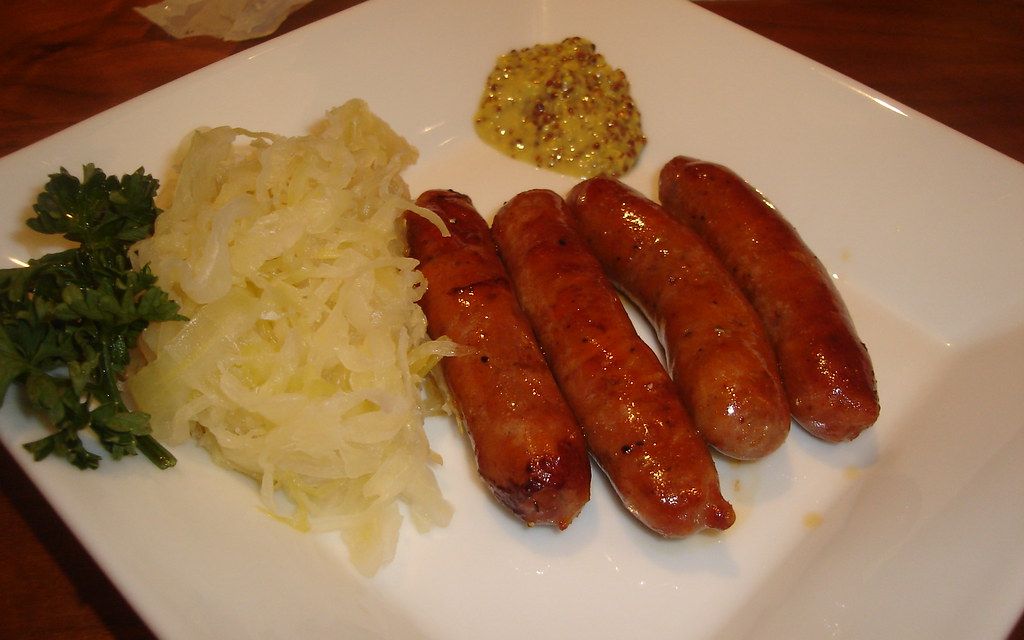
Sauerkraut and kimchi are the hard sell, and the way in is as a condiment rather than a vegetable — a small amount alongside something rich, which is how they are eaten in the places that have always eaten them. Sauerkraut with sausage and potatoes makes sense to people. A bowl of sauerkraut does not.
Milder versions help. A young kraut, fermented a week rather than six, is far gentler than a mature one. Carrot and apple fermented together is sweet enough that children will usually try it.
Where to begin
Sauerkraut. One cabbage, twenty grams of salt per kilogram of shredded cabbage, a jar, a weight to hold it under, and three weeks in a cool corner.
Shred the cabbage, weigh it, add the salt, and squeeze it hard for five minutes until it releases enough liquid to cover itself. Pack it into a jar, push it down under the brine, weigh it down so nothing floats, and cover loosely so gas can escape.
It will be bubbling within three days. Taste it weekly. When it tastes right to you, it is done. Move it somewhere cold and it will keep for months.
Two things go wrong. A white film on the surface is kahm yeast — harmless, skim it off. Fuzzy growth in any colour is mould, and it means something was above the brine. Everything must stay submerged. That single rule prevents almost every failure.
Start here because it teaches you what a healthy ferment smells like, what active bubbling looks like, and how to keep things under the brine. Every other ferment assumes you already know those three things.
The short version
Fermenting preserves food without power, makes it easier to digest, frees minerals that were locked away, creates vitamins that were not there before, and tastes remarkable.
Those five are settled. The gut bacteria benefit is probable and worth having, but it is a bonus on top, not the reason to bother.
Buy unpasteurised or make your own, eat a little most days rather than a lot occasionally, and start with a cabbage.