Why Is Fermented Food Good For You?
Because microbes do work on the food before you eat it. Five mechanisms explain almost every benefit — pre-digestion, removing what blocks absorption, building vitamins, converting compounds, and the acid itself.
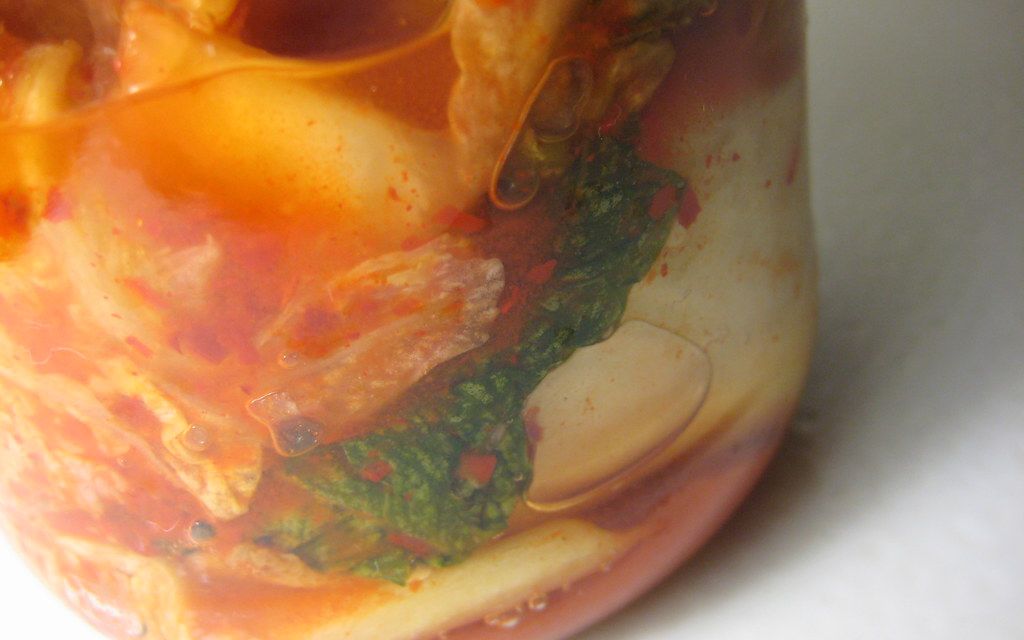
The one-sentence answer: because microbes do work on the food before you eat it, and that work leaves the food easier to digest and carrying more of what you can actually use.
That sounds vague until you look at the specific mechanisms, and there are only five of them. Almost every claim made for fermented food comes back to one of these. Understanding them makes it obvious which claims are solid and which are guesswork.
This piece is about the mechanisms. If you want the full catalogue of benefits food by food, the evidence behind each, and who should be careful, that is in the longer guide to the benefits of eating fermented foods.
One: they digest it before you do
Microbes eat by breaking large molecules into smaller ones. Anything they have already broken down is work your own digestion does not have to do.
Lactose. The bacteria in yoghurt and kefir consume much of the milk sugar as they work, and carry their own lactase enzyme, some of which keeps working in your gut. This is why plenty of people who cannot drink milk eat yoghurt without trouble. Hard cheese goes further still — most of the lactose leaves in the whey and the rest is consumed during ageing.
Protein. Fermenting breaks proteins into peptides and free amino acids. That makes them easier to absorb, and it is also where the savoury flavour comes from — glutamate, the umami compound, is a free amino acid. The taste and the digestibility have the same cause.
The sugars that cause wind. Pulses contain oligosaccharides that humans cannot digest, so gut bacteria ferment them lower down and produce gas. Fermenting the pulses first means the microbes have already dealt with them. This is why tempeh sits far better than plain cooked soya.
Gluten, partly. A long sourdough fermentation breaks down some gluten proteins. Some people with mild sensitivity find slow-fermented sourdough tolerable when fast bread is not. It is important to be clear that this is partial and that sourdough is not safe for coeliac disease.
Two: they remove what blocks absorption
Plants contain compounds that interfere with digestion or with mineral absorption. They are usually there to protect the seed, and they are not designed with your convenience in mind.
Phytic acid is the big one. It occurs in grains, pulses, nuts and seeds, and it binds iron, zinc, calcium and magnesium, carrying them through you unabsorbed. The mineral is on the label and it is not in you.
Fermenting breaks phytic acid down, through both bacterial enzymes and the grain's own phytase, with acidity speeding the process. A slow sourdough delivers meaningfully more available iron and zinc than a fast loaf made from the same flour.
This matters most for exactly the people who most want it to: anyone eating a lot of wholemeal and pulses. Wholemeal flour contains more phytic acid than white, so the loaf that looks healthier can deliver fewer minerals unless it has been properly fermented.
Other compounds go the same way. Lectins and enzyme inhibitors are reduced by fermenting. Some oxalates are broken down. In cassava, fermenting is not a nicety but a necessity — it removes cyanogenic compounds that would otherwise make the root poisonous, and it is why traditional processing takes days.
Three: they build things that were not there
Microbes manufacture vitamins as a by-product of their own metabolism, and you get the benefit. A fermented food can contain more of a vitamin than the raw ingredient did.
B vitamins, including folate and, in some ferments, B12.
Vitamin K2, which directs calcium into bone rather than into arteries and is scarce in most diets. Natto is the richest known food source. Aged cheese and some fermented sausage carry useful amounts.
Bioactive peptides. When bacteria break milk protein apart, some of the fragments are biologically active. Several have a measurable, if modest, effect on blood pressure in trials. That effect belongs specifically to the fermented product and not to the milk it came from.
Four: they convert what was already there
Some compounds are present in the raw food but in a form you cannot use. Fermenting changes them.
Glucosinolates into isothiocyanates. Cabbage and its relatives contain glucosinolates, which are inactive as they stand. Fermenting converts them into isothiocyanates, the compounds behind most of the research interest in brassicas. Sauerkraut carries them in a more available form than raw cabbage does.
Bound isoflavones freed. Soya's isoflavones are poorly absorbed in the form they occur in. Fermenting into miso, tempeh or natto releases them.
Vitamin C preserved rather than destroyed. Fermenting does not create vitamin C, but it holds onto it far better than cooking does. This is why barrels of sauerkraut went to sea for centuries and kept crews from getting scurvy — a benefit that had nothing to do with bacteria in the gut and everything to do with preservation without heat.
Five: the acid itself
The lactic acid the bacteria produce is not just a by-product. It does several things in its own right.
It preserves. Below about pH 4.6 nothing that causes food poisoning can grow. A finished sauerkraut sits nearer pH 3.4, which is not close to the line. This is the oldest benefit of all and the reason the technique exists.
It slows the blood sugar response. Acidity slows gastric emptying and starch digestion. Sourdough bread produces a lower and slower blood sugar rise than the same flour raised with baker's yeast, and this is reasonably well documented.
It helps mineral absorption directly, independently of the phytic acid effect, because minerals are more soluble in acid conditions.
It tastes of something. Not a health benefit, and it is the reason most people keep eating these foods once they start.
What about the gut bacteria?
This is the claim that dominates the marketing, and it deserves a more careful answer than the five mechanisms above.
The best evidence is a Stanford trial from 2021, which put people on either a high-fibre diet or a fermented-food diet for ten weeks. The fermented-food group showed increased microbial diversity and reduced markers of inflammation. That is a real, controlled result.
It is also one study, in a small group, over ten weeks. And the second half of the claim — that greater microbial diversity makes you healthier in ways you would notice — is plausible and widely believed but far less firmly established.
One thing worth knowing: most bacteria from fermented food do not settle permanently in your gut. They pass through. That is not a failure — a passing organism still interacts with your gut lining on the way — but it means any benefit is maintained by continuing to eat them rather than banked by a course of treatment.
The reasonable position is that this is a probable benefit worth having, sitting on top of five mechanisms that are not in doubt at all. It is not the foundation of the case. It is the least certain part of it, and it is odd that it gets almost all the attention.
Why this framing matters
Notice what the five mechanisms have in common: none of them requires the food to still be alive when you eat it.
The pre-digestion has happened. The phytic acid is broken down. The vitamins have been made. The glucosinolates have been converted. The acid is stable and heat does not touch it.
So sourdough bread, baked at 220°C with nothing alive in it, still delivers the mineral benefit. Tempeh, always cooked, still delivers the freed isoflavones and the improved digestibility. Cooked sauerkraut is still as sour, still as easy on the gut, and still carries the vitamins.
This is worth knowing because it is the opposite of what most articles imply. If live bacteria were the whole story, cooking a ferment would waste it. Since live bacteria are one benefit among six, cooking costs you one of them and leaves the rest intact.
How much of this is new?
None of it. The mechanisms were only described recently; the practice is thousands of years old, and it was not adopted for health reasons.
It was adopted because before refrigeration there were four ways to keep food — dry it, salt it, freeze it if the climate allowed, or ferment it — and fermenting was the only one that worked everywhere, cost nothing, and improved the food rather than merely holding it still.
Every settled culture arrived at it independently. Chinese fermented drink around 7000 BC. Egyptian bread and beer. Polish cheese-making around 5500 BC. Korean kimchi, German sauerkraut, Japanese miso, Indian idli, Ethiopian injera, West African ogi.
That matters for one reason. Nutritional advice changes constantly and much of it turns out to be wrong. A food practice that fed most of humanity for several thousand years, and that turns out on examination to have five identifiable mechanisms behind it, is on considerably firmer ground than something discovered in a study last year.
What counts as fermented, and what does not
A practical distinction, because supermarket labelling makes this harder than it should be.
Genuinely fermented and still live: unpasteurised sauerkraut and kimchi from the chilled section, live yoghurt, kefir, unpasteurised miso, kombucha, brine-fermented pickles, many soft and surface-ripened cheeses.
Genuinely fermented but not live: sourdough bread, tempeh, soy sauce, most hard cheese, cured salami, vinegar, chocolate and coffee. All still deliver the first four mechanisms.
Not fermented at all, whatever the packaging suggests: vinegar pickles, which never fermented and are simply cucumbers in acid. Most supermarket sauerkraut in tins or on ambient shelves, which was fermented and then pasteurised. And any bread labelled sourdough that was raised in two hours with added baker's yeast, which skipped the fermentation that produced the benefit.
The test on a label is simple. Live products are sold chilled and say unpasteurised, live or raw. Anything on an ambient shelf has been heat treated. Anything listing vinegar in the ingredients was pickled rather than fermented.
The simplest way to get the benefit
Since the mechanisms are the point, the practical question is which foods deliver most of them for least effort.
Kefir gives you pre-digestion, vitamins, live bacteria and bioactive peptides, and costs the price of milk. The grains grow while they work, so one set is a lifetime supply.
Sauerkraut gives you the acid, preserved vitamin C, converted glucosinolates, fibre and live bacteria, from one cabbage and twenty grams of salt.
Sourdough gives you the phytic acid breakdown, the slower blood sugar response and better keeping, from flour and water.
Those three between them cover every mechanism in this article and cost almost nothing. Variety matters more than quantity, because different ferments carry different organisms and do different jobs. A couple of tablespoons of something live most days, from more than one source, is closer to what the research reflects than a large amount occasionally.
Where it does not help
Being clear about the limits, briefly.
Salt. Sauerkraut runs around two per cent salt and there is no low-salt version that ferments safely. Miso and soy sauce are saltier again. If you are watching your intake, this counts against.
Histamine. Fermented foods are high in it, and people who react to histamine react to these. That is a genuine intolerance.
Tyramine. Anyone taking a monoamine oxidase inhibitor must avoid aged and fermented foods. The interaction is dangerous and the prescribing information says so.
Starting too fast. A large first serving is genuinely uncomfortable. Build up over a fortnight.
It is not medicine. Nothing here treats a condition. It is good food, and that is the whole claim.
The short version
Fermented food is good for you because microbes do five useful things to it before you eat it. They break down what your digestion would struggle with. They remove what blocks mineral absorption. They manufacture vitamins. They convert compounds into forms you can use. And the acid they produce preserves the food, slows the blood sugar response and makes it taste of something.
The live bacteria are a sixth, probable benefit sitting on top of those five. It gets most of the attention and it is the least settled part of the case.
For the full picture — every food, what each one gives you, and who should take care — see the complete guide to the benefits of eating fermented foods.