Five Reasons A Home Water Filter Is Worth It
Better tasting water you actually drink, a shower that stops drying your skin, no more bottles, appliances that last longer, and water when the mains fail. Plus the case against, and which filter suits which reason.

Most people who buy a water filter buy it for one reason and then find the other four were the ones that mattered.
Here are the five that hold up, what each one is actually worth, and the case against buying one at all.
One: you will drink more water
This sounds like a small thing and it is the one people report most often.
Mains water is treated with chlorine or chloramine, deliberately, to keep it safe through the pipes. That is a public health measure that works and nobody should want it removed from the supply. It also gives water a taste and a smell that some people find genuinely off-putting.
Take the chlorine out and water tastes of nothing, which is what water is supposed to taste of. Tea and coffee change noticeably too — chlorine reacts with the compounds in both, and filtered water makes a clearly better cup.
The practical effect is that a jug of filtered water in the fridge gets drunk and a jug of chlorinated water does not. If somebody in the house has been living on squash and fizzy drinks because they do not like the taste of the tap, this is the change that fixes it.
It is not a health claim about the filter. It is a behaviour change, and it is the most reliable benefit on this list.
Two: your shower stops drying your skin out
The most underrated reason, and the one almost nobody buys a filter for.
A ten minute shower puts you in contact with far more water than you drink in a day. You absorb some chlorine through skin, and you inhale it in the steam, where it is concentrated by the heat.
For a lot of people this is the actual cause of dry skin, itchy scalp, irritated eyes and hair that will not behave — problems they have blamed on shampoo, on hard water, or on nothing in particular.
A kitchen filter does nothing about this. It treats the water you drink and leaves the water you stand in untouched.
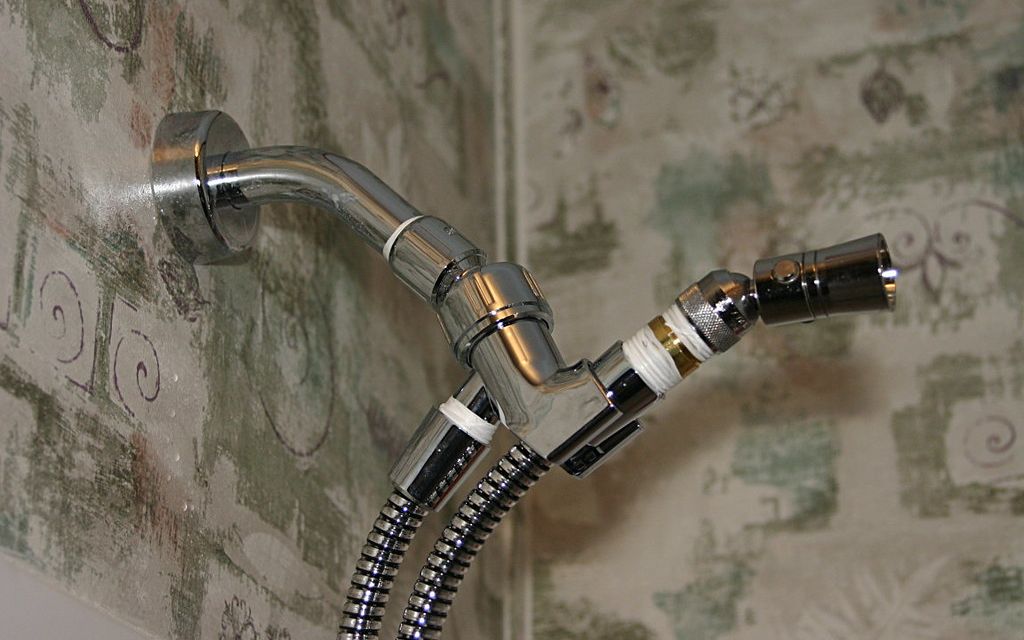
The fix is either a whole house filter or a shower filter, and a shower filter costs very little and screws on in a minute. If anyone in the house has eczema or sensitive skin, this is the cheapest experiment worth running.
Worth being straight about the limits: a shower filter reduces chlorine, it does not eliminate it, because the water moves fast through a small cartridge. And it does nothing about hardness, so it will not help with limescale or lathering.
Three: no more carrying bottles
Bottled water is expensive out of all proportion to what it is. A household that drinks it steadily spends a genuinely surprising amount over a year, and the money is only part of it.
The rest is the logistics. Buying it, carrying it, storing it, and dealing with the empties. A family that gets through several litres a day is moving a considerable weight of plastic through the house every week.
Any filter — a jug, an under-sink unit, a countertop gravity filter — ends that entirely. The payback period on a filter jug against bottled water is measured in weeks.
There is a plastic argument as well, and it is a real one, but the practical case stands on its own. Not carrying crates of water is worth something on its own terms.
Four: your appliances last longer
The reason nobody thinks about until something expensive fails.
Sediment and scale shorten the life of everything water passes through. Washing machines, dishwashers, boilers, hot water cylinders, showers, taps and kettles all suffer.
Scale is the worse of the two. A layer of limescale on a heating element insulates it, so the appliance works harder and runs hotter to do the same job. That costs energy while it is working and shortens the life of the element.
On a combi boiler in a hard water area this is not a small matter. A boiler is one of the most expensive things in a house to replace, and scale is one of the commonest reasons they fail early.
The distinction to understand: a filter removes sediment, and only a softener or a conditioner deals with scale. They are different machines solving different problems, and people confuse them constantly. If your kettle furs up, a filter alone will not fix it.
Five: water when the mains fail
The reason that matters least most of the time and most when it matters.
Mains supplies are interrupted. Burst pipes, contamination incidents, boil water notices, flooding. It does not happen often and it does happen, and when it does, the shops sell out of bottled water within hours.
A gravity filter — the countertop sort with elements in the top chamber — needs no power, no pressure and no plumbing. It will make stored water, rainwater or water from a questionable source drinkable, and it will do it during a power cut.
This is also the reason to think carefully about which type you buy. A plumbed-in filter with an electric pump is excellent until the electricity stops. A gravity filter in a cupboard costs nothing to keep and works under any conditions.
Related, and separate: the sense of knowing what is in your water rather than assuming. Testing costs little, your supplier publishes a report for your postcode free, and finding out is worth doing whether or not you buy anything afterwards.
The case against
Four arguments worth taking seriously.
Mains water is already safe. In the UK it is treated, tested and regulated, and it meets a legal standard. A filter is improving something that was not dangerous. That is a fair point, and it is why most of the reasons above are about taste, comfort, cost and convenience rather than about safety.
The running cost is real and continuing. Cartridges need replacing, forever. Over ten years the consumables usually cost more than the system did. A cheap system with expensive proprietary cartridges is a bad buy however attractive the initial price.
A neglected filter is worse than no filter. Exhausted carbon stops adsorbing silently and can release what it captured. Damp media that has sat unused for months is somewhere bacteria will grow. If you are not going to change the cartridges on schedule, do not fit one.
Some claims are oversold. Standard carbon filters do not remove fluoride, do not soften water, and do not remove nitrates or dissolved minerals. Anyone telling you a basic filter does those things is misleading you.
Which filter for which reason
The five reasons point at different products, and buying the wrong one is the usual disappointment.
For taste and drinking more water: a filter jug, a tap-mounted filter, or an under-sink carbon block. All cheap, all effective for chlorine.
For skin and showers: a shower filter, or a whole house filter if you want it dealt with at every outlet.
For replacing bottled water: anything. A jug will do it.
For appliances and scale: a whole house sediment filter for the grit, plus a softener or a conditioner for the scale. A filter alone is not enough.
For emergencies and power cuts: a countertop gravity filter, which needs neither power nor pressure.
For removing fluoride, nitrates or dissolved solids: reverse osmosis under the sink. Nothing simpler will do it.
What each type actually costs
Rough shape of the spending, because the purchase price is the smaller half of it.
Filter jug. Cheapest to buy, and the cartridges are the most expensive per litre of any option because they are small and last a few weeks. Fine for one or two people, poor value for a family.
Tap-mounted filter. Slightly more to buy, cartridges last a few months. No plumbing. Reduces flow at the tap noticeably.
Under-sink carbon block. More to buy and to fit, and by far the best value per litre. Cartridges are standard sizes and last six to twelve months. This is the sensible choice for a household drinking filtered water daily.
Countertop gravity filter. Moderate to buy, and the elements last a very long time — often several thousand litres. Cheap to run, no plumbing, works without power.
Under-sink reverse osmosis. More again to buy and fit, with pre-filters annually and a membrane every few years. Removes far more than anything above. Also wastes some water.
Whole house. The largest outlay, and the cartridges are bigger and correspondingly dearer. Treats every outlet.
The number worth calculating before buying anything: cost of cartridges per year, multiplied by five. That figure separates a good buy from a cheap one, and it is where proprietary cartridge sizes cause trouble — a system tied to one supplier's cartridges leaves you no way to shop around for the next decade.
What none of them do
Worth stating plainly, because these gaps cause most of the disappointment.
No ordinary filter softens water. If your kettle furs up, a filter will not stop it. That needs a softener or a conditioner, which is a different machine.
Carbon does not remove fluoride. Nor do jugs, sediment filters, ceramic filters or standard whole house systems. Only reverse osmosis, activated alumina or bone char do, and only reverse osmosis does it as standard.
Nothing removes nitrates except reverse osmosis or a specific ion exchange resin. This matters on agricultural well supplies and not much on mains.
Filtering does not disinfect. Unless the system includes ultraviolet or a certified sub-micron element, it is not a barrier against bacteria. On mains water this does not matter because the water arrives safe. On a private supply it matters a great deal.
Where to start
Two steps, in order, before spending anything.
Find out what is in your water. On mains supply, your water company publishes a quality report by postcode, free and legally required to be accurate. It will tell you the hardness, whether they use chlorine or chloramine, and the regulated contaminant levels. On a well or borehole, get a laboratory test, because nobody else is looking.
Write down which of the five reasons is yours. That decides the product. Buying a filter without answering this is how people end up with a system that does not fix the thing that was bothering them.
Then start small. A filter jug costs almost nothing and answers the taste question in a week. A shower filter costs little more and answers the skin question in a fortnight. Both are reversible decisions.
If those work and you want it everywhere, that is the point to consider a plumbed system — and the guide to whole house water filters covers sizing, stages, costs and installation properly.
Keeping it working
Every reason on this list depends on the filter actually filtering, and that depends on one habit.
Carbon does not warn you when it is finished. It has a fixed capacity, and once its surfaces are occupied, everything passes straight through. The water tastes the same, flows the same, and looks the same. If chlorine is what you were removing you may eventually notice the taste coming back, but for anything without a taste there is no signal at all.
So change cartridges on a date, not on symptoms. Write the date on the cartridge in marker when you fit it, or put it in a calendar. This is the single difference between a filter that works and one that is decorative.
Two other habits worth having. Flush a new cartridge before use — the first few litres carry carbon dust and manufacturing residue, and the instructions will say how much. And if a filter has stood unused for more than a week or two, run it for a minute before drinking, because water sitting still in damp media is where bacteria grow.
If you fit anything plumbed in, put pressure gauges either side. The difference between the two readings tells you exactly when the cartridge is blocking, which removes the guesswork entirely and costs very little.
The short version
The five reasons that hold up: you drink more water when it tastes of nothing, your skin stops reacting to the shower, you stop carrying bottles, your appliances last longer, and you have drinkable water when the mains fail.
The case against is that mains water was already safe, the cartridges cost money forever, and an unmaintained filter is worse than none.
Find out what is in your water first, decide which reason is yours, and start with the cheapest thing that answers it.