Does A Berkey Shower Filter Remove Fluoride?
No. The shower filter uses KDF-55, which works on chlorine and metals by a chemical route that fluoride cannot take part in. Here is what it does remove, and why fluoride in a shower matters far less than chlorine does.
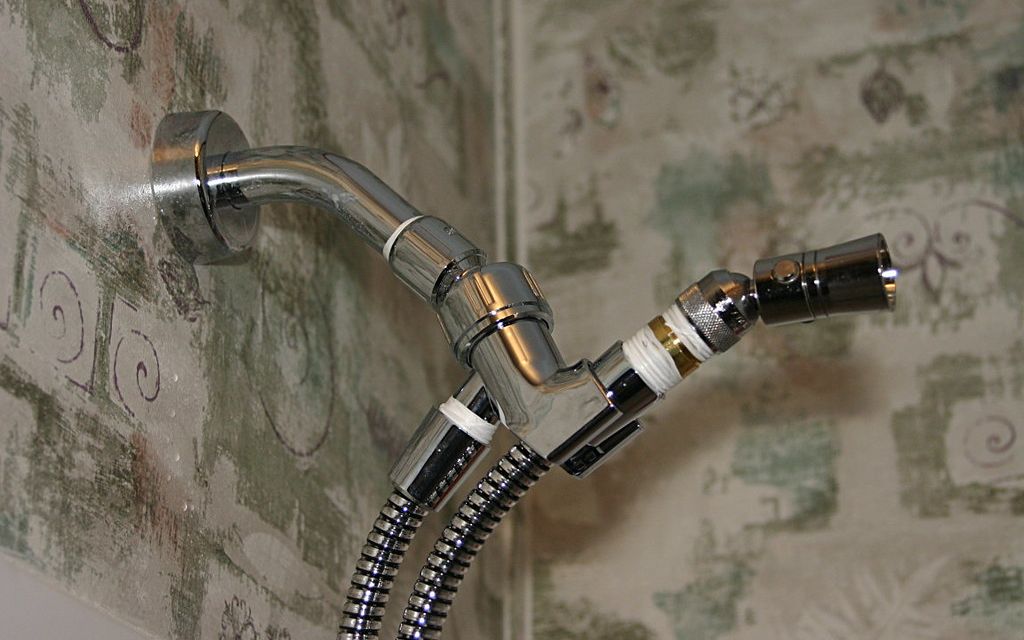
No. A Berkey shower filter does not remove fluoride, and neither does any other shower filter on the market.
This is not a shortcoming of one product. It is a consequence of how these filters work and how fast water moves through them. No shower filter of any brand removes fluoride in a meaningful amount.
The more useful part of the answer is that fluoride in shower water matters far less than chlorine does, for reasons worth understanding.
What is inside a shower filter
Almost every shower filter, Berkey's included, is built around a medium called KDF-55, usually with some activated carbon alongside it.
KDF is a granular alloy of copper and zinc — KDF-55 is roughly 55 per cent copper and 45 per cent zinc. It does not filter in the ordinary sense of catching things. It works by a chemical reaction called reduction-oxidation, usually shortened to redox.
When chlorinated water passes over the alloy, electrons transfer between the metals and the chlorine. Free chlorine is converted into chloride — a harmless dissolved ion, chemically the same thing as the chloride in table salt. The chlorine is not captured. It is converted into something inert.
The same electrochemical process pulls some dissolved heavy metals out of solution, plating them onto the alloy surface. And zinc ions released in the process suppress bacteria and algae inside the housing, which is why KDF cartridges do not go stale the way damp carbon can.
Why KDF cannot touch fluoride
Because there is no reaction available.
Redox chemistry needs something that can gain or lose electrons. Chlorine can — it is an oxidising agent, and that is precisely what makes it useful as a disinfectant and vulnerable to KDF.
Fluoride is different. The fluoride ion is already in its most reduced state. It has nothing further to give and nothing it will readily take under the conditions inside a shower filter. There is no redox reaction for KDF to run.
So the medium is not weak against fluoride or partially effective against it. It is simply the wrong tool. Asking KDF to remove fluoride is like asking a magnet to pick up wood.
Why the carbon does not help either
Most shower filters include some activated carbon, and it is worth explaining why that does not rescue the situation.
Carbon works by adsorption — contaminants stick to the enormous internal surface area of the carbon granules. It is very good at large organic molecules: chlorine by-products, solvents, the compounds that cause taste and smell.
Small charged mineral ions do not stick. Fluoride, sodium, nitrate, calcium and the rest pass straight through. This is a limitation of the chemistry, not of any particular product, and it is why no carbon filter anywhere removes fluoride.
Carbon in a shower filter has a further problem. Adsorption works considerably less well at high temperatures, and a shower runs at 38 to 42°C. It also needs contact time, and a shower pushes eight to twelve litres a minute through a cartridge the size of a fist. Between the heat and the speed, the carbon in a shower filter is doing much less than the same carbon would do under a kitchen tap.
This is the main reason shower filters lean on KDF rather than carbon. KDF's reaction is fast and is not impaired by heat.
Why fluoride in a shower matters much less
This is the part that changes the question, and it comes down to one property: fluoride does not evaporate.
Chlorine is volatile. In a hot shower it leaves the water and enters the air, and the enclosed steamy space concentrates it. You breathe it in, and inhalation delivers it far more efficiently than drinking would. That is a real exposure, and it is why chlorine in shower water is worth dealing with.
Fluoride salts are not volatile. They stay dissolved in the water, go down the drain, and never enter the air you are breathing. There is no inhalation route at all.
That leaves absorption through skin, and the evidence is that this is very limited. Skin is a good barrier to charged mineral ions, which is exactly what fluoride is. Studies looking at dermal uptake of fluoride from water find it low, and far below what you would get from swallowing the same water.
So the two contaminants behave in opposite ways in a shower. Chlorine becomes more of a concern there than at the tap, because heat and steam create an inhalation route. Fluoride becomes less of one, because there is no route at all beyond skin contact.
If reducing your total fluoride exposure is the aim, the water you drink is where it matters, and the shower is close to irrelevant.
What the shower filter does do
Since it does not do the thing you asked about, here is what it is actually for.
Free chlorine. Substantially reduced, and this is the main job. Reduction is partial rather than complete because of the flow rate, but it is enough that most people notice the difference in their skin within a fortnight.
Some heavy metals. Lead, mercury, iron and others are plated out by the electrochemical reaction. Useful, though the amounts in mains water are small to begin with.
Hydrogen sulphide. The rotten-egg smell on some supplies.
Bacteria and algae inside the unit. The zinc suppresses growth in the housing itself, which is a real advantage over a carbon-only cartridge sitting damp between uses.
Some scale inhibition. Modest, and not a substitute for a softener.
What it does not do
Fluoride. Covered above.
Chloramine, well. Many water companies now use chloramine instead of chlorine because it persists longer in the pipes. KDF handles it far less effectively than free chlorine, and carbon needs long contact time to deal with it — longer than a shower allows. If your supplier uses chloramine, expect noticeably less benefit. Check the supplier's report for your postcode; it will say which they use.
Hardness. It does not soften water. Limescale, poor lathering and spotting are unaffected.
Dissolved minerals generally. Sodium, nitrates, sulphates. None of them.
Bacteria in the water. It is not a disinfection barrier. On mains water this does not matter, because the water arrives safe.
Is a shower filter worth having at all?
Given that it does not do the thing this article started with, a fair question.
The case for it rests on one fact: a ten minute shower puts you in contact with far more water than you drink in a day, and heat and steam create an exposure route that drinking does not.
For most people the noticeable effects are dry or itchy skin, an irritated scalp, eyes that sting, and hair that behaves badly. Those are commonly blamed on shampoo or on hard water, and for a proportion of people they are chlorine.
The honest position is that it is a cheap experiment with a clear result. A shower filter costs little, screws on in a minute, and a fortnight tells you whether it makes a difference to you. If it does, you keep buying cartridges. If it does not, you have lost very little and you have ruled something out.
Anyone in the house with eczema or genuinely sensitive skin is the strongest case for trying it. Anyone who has never noticed a problem is the weakest.
What it is not is a health intervention with evidence behind it. It reduces one exposure that some people react to. That is the whole claim, and it is enough to justify the cost without being dressed up as more.
Whole house instead
If the shower is the reason you are looking at filters, it is worth knowing the alternative before buying a cartridge that screws onto one shower head.
A whole house filter fitted at the incoming main treats every outlet — every shower, every bath, the taps, the washing machine. It has far more media and a much larger housing, so it deals with chlorine more thoroughly than a shower cartridge managing eight litres a minute through something the size of a fist.
It costs considerably more to buy and fit, and the cartridges are bigger and dearer. It also does nothing extra about fluoride, for exactly the reasons in this article.
The decision usually comes down to how many showers there are and whether anyone cares about the bath taps and the laundry. One shower and one sensitive person is a shower filter. A family, several bathrooms and a general dislike of chlorinated water is a whole house system.
If you do want fluoride out of shower water
The direct answer is that there is no practical way to do it, and it is worth understanding why rather than looking for a better product.
Only three methods remove fluoride: reverse osmosis, activated alumina and bone char. All three need long contact time between the water and the medium.
A shower needs eight to twelve litres a minute. A domestic reverse osmosis membrane produces a few litres an hour. The gap is not a matter of buying a bigger one — it is three orders of magnitude, and bridging it means commercial membranes, a large storage tank and a pump to repressurise, all to feed a shower.
Activated alumina at whole house flow rates has the same problem. It achieves its rated removal at slow flow, and at shower speed the contact time is far too short.
Whole house reverse osmosis exists and is occasionally the right answer for a property with unusable water. For a house on ordinary mains water wanting fluoride-free showers, the cost and the waste are out of all proportion to a benefit that, as above, is close to nil.
The sensible conclusion: use a shower filter for chlorine, which is where the real shower exposure is, and deal with fluoride in the water you drink.
For drinking water, this is what works
Reverse osmosis under the kitchen sink removes 85 to 95 per cent of fluoride and almost everything else along with it. The full picture — how the membrane does it, what changes the figure, the waste water question and the alternatives — is in the guide to whether reverse osmosis removes fluoride.
Activated alumina and bone char are the other two options, and both work by gravity if you want something with no plumbing.
What does not work, whatever the packaging says: carbon filters, filter jugs, sediment filters, ceramic filters, water softeners, ordinary whole house filters, and boiling. Boiling is worth a specific warning — it evaporates water and leaves the fluoride behind, so the concentration goes up rather than down.
Looking after a shower filter
Change it on schedule. Most are rated for around six months or a stated volume, whichever comes first. Like carbon, KDF gives no warning when it is spent — the flow does not change and the water looks identical.
Backflush it if the design allows. Some units can be reversed briefly to lift accumulated sediment out of the media bed. It restores flow and extends life.
Expect some pressure loss. Any cartridge in the line costs you a little flow. If your shower is already weak, a filter will make it weaker, and that is worth knowing before fitting one.
Run it before the first shower. New media carries fine dust, and the first minute or two can run discoloured.
Fit it correctly. Most screw between the pipe and the shower head. Filters designed for a fixed head do not work well on a hand-held hose, where the extra weight and the bend cause problems.
Mistakes worth avoiding
Buying a shower filter to remove fluoride. None of them do, and no future product will, because the contact time is not there.
Believing a "removes fluoride" claim on a shower filter. Ask for the certification and the test data. There will not be any.
Expecting it to soften the water. It will not, and limescale will carry on exactly as before.
Fitting one on a chloraminated supply and expecting chlorine-level results. Check what your supplier uses first.
Leaving it in for years. Spent media is not doing anything, and you will not be able to tell.
The short version
A Berkey shower filter does not remove fluoride, because it works by a redox reaction that fluoride cannot take part in, and because carbon does not adsorb fluoride either. No shower filter does.
It does reduce free chlorine, which is the thing that matters in a shower — chlorine evaporates into the steam and is inhaled, while fluoride stays dissolved and goes down the drain.
Use the shower filter for chlorine and skin. Deal with fluoride in your drinking water, with reverse osmosis, activated alumina or bone char.