Are Cats A Danger To Chickens?
Mostly no, to adult birds. Definitely yes, to chicks. Here is what a cat will and will not take, why one in your coop is often hunting rats rather than hens, and what to do about it.
Finding a cat inside the coop is alarming, and the honest answer is more reassuring than most people expect.
A cat is a serious threat to chicks and a real but limited one to bantams. To a full-grown standard hen it is very rarely a threat at all. And a cat that keeps turning up in a coop at night is often there for the same reason you are worried about the coop — because there are rodents in it.
What a cat will actually take
Cats are opportunist hunters with a strong sense of what they can handle. They take prey they can kill quickly and carry, and they are cautious about anything that might fight back.
Chicks and very young birds: genuinely at risk. Anything up to about six weeks is easy prey and cats do take them. A brooder or a broody hen with a young clutch on the ground needs protecting properly.
Bantams and small breeds: some risk. A small light bird is closer to what a cat considers manageable. Not common, not impossible.
Full-grown standard hens: rarely. A large hen is a substantial animal — two to three kilograms, with a beak, claws and no hesitation about using them. Most cats want nothing to do with one. A hen will often see the cat off.
Sick, injured or very old birds: a cat may take one that cannot get away, in the same way it would take any weakened animal.
Why the cat is in the coop
This matters, because the answer changes what you should do.
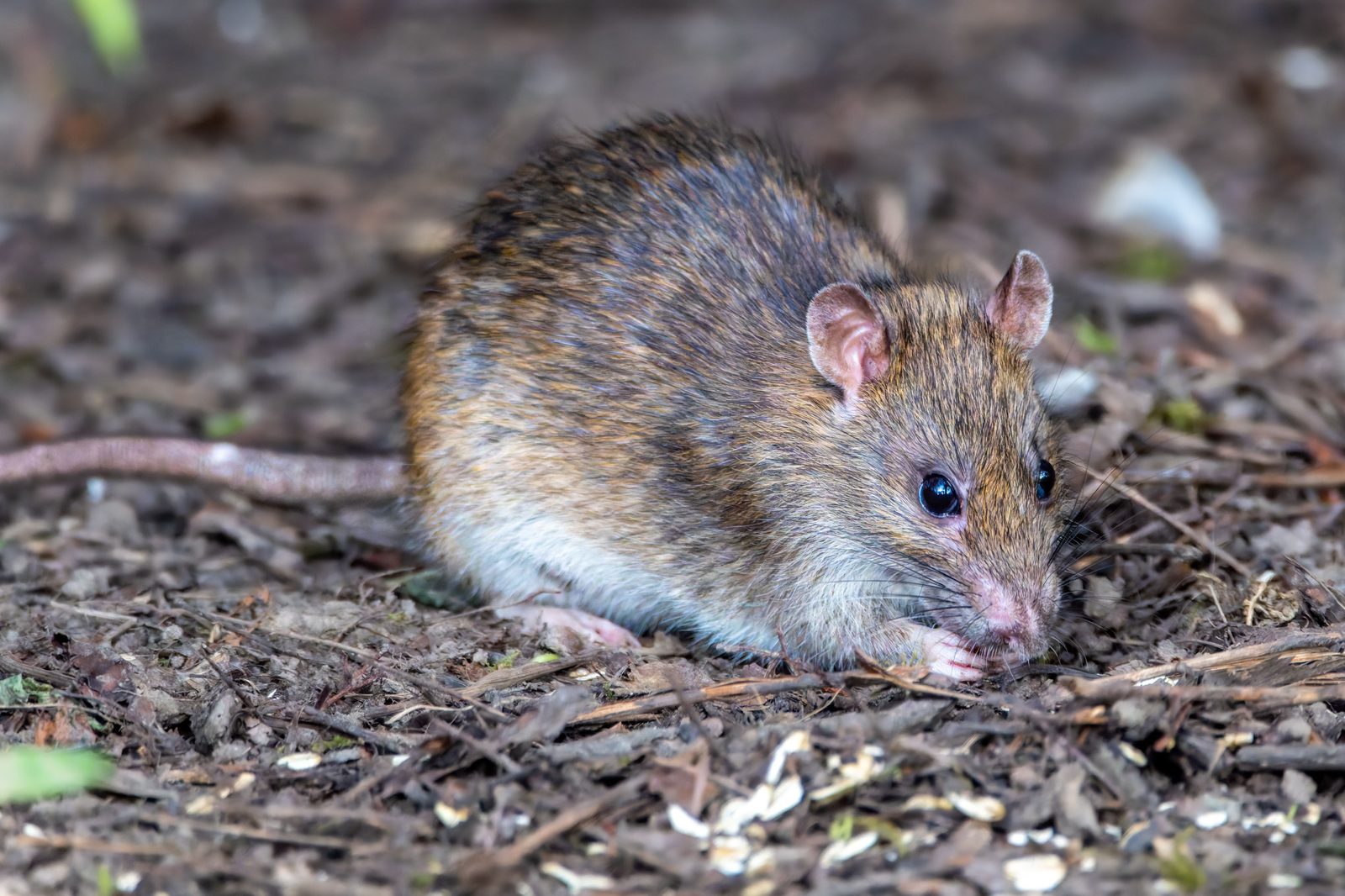
A coop with feed in it has mice, and often rats. That is a reliable, concentrated food source, and it is exactly what a hunting cat is looking for. Most cats found in coops at night are hunting rodents, not birds.
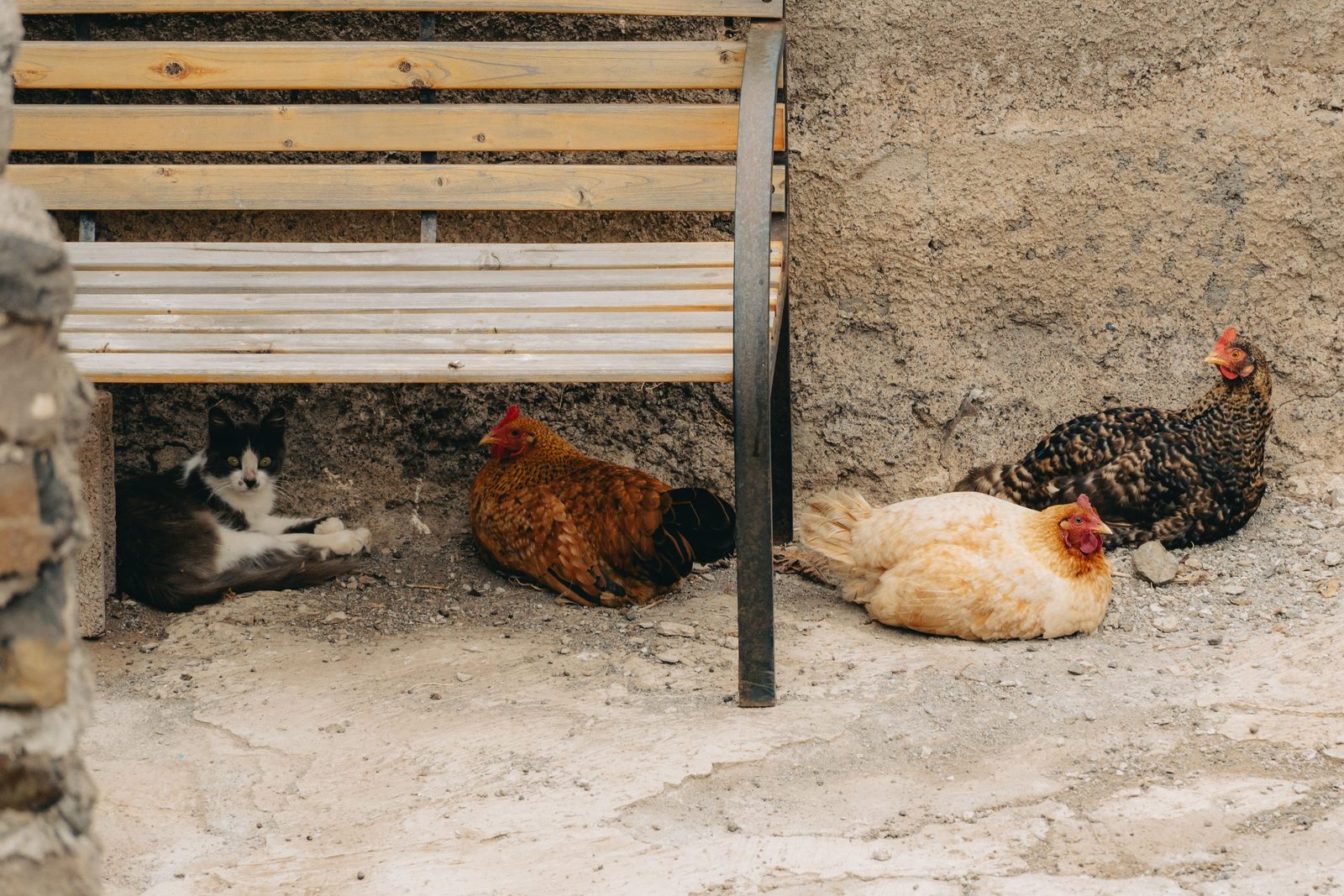
You can usually tell. A cat interested in the chickens watches them, stalks, and the birds react — alarm calling, running, going up. A cat hunting rodents ignores the birds entirely, and the birds largely ignore it back. Flocks and farm cats coexist on a great many holdings without incident.
So a cat in the coop is often a symptom rather than the problem. If it is there, ask what it is eating.
Why a hen is a harder target than she looks
People picture a chicken as a soft, slow, defenceless thing, and that is not what a cat sees.
A standard laying hen weighs two to three kilograms. A domestic cat weighs four to five. Prey at more than half the hunter's own body weight is a serious undertaking, and cats are conservative hunters — they take mice, voles, small birds and young rabbits, things that die in one bite and can be carried away.
A hen also fights. She has a hard beak, scaled feet with claws, and a strong instinct to defend herself and the flock. Hens will mob a cat, and a group of birds running at one is usually enough. Anyone who has watched a broody hen see off a dog will recognise this.
And she is loud. A hen's alarm call brings the rest of the flock and, on a homestead, brings you. Cats hunt by ambush and dislike commotion.
None of which makes it impossible. It makes it unlikely enough that when an adult bird is killed, the sensible first thought is fox, dog or mink rather than cat.
What changes the odds
Five things make a cat more of a risk than the general picture suggests. If several apply to you, take it more seriously.
Small breeds. Bantams, silkies and light breeds sit much closer to what a cat considers manageable prey.
Young stock. Anything under about three months. Point-of-lay pullets are usually safe; growers are not.
Birds that cannot get away. A bird shut in a small run with nowhere to go, or one that is sick, lame or elderly, has lost the main defence she has.
A single bird. A flock reacts together. One hen on her own is far more vulnerable, and it is one of several reasons not to keep a chicken alone.
A cat that has already succeeded. Hunting is learned. A cat that has taken a chick will come back, and may progress to bigger birds as it gains confidence. This is the one situation where a cat becomes a genuine ongoing problem rather than a passing worry.
The exception worth knowing
Individual cats vary, and some do learn to take poultry. A cat that has succeeded once will try again, and a bird-hunting cat is a genuine and persistent problem rather than a one-off.
The signs are specific: feathers scattered with a kill site, repeated losses, birds that panic when the cat appears, and losses in daylight when the flock is out. That is different from a cat crossing the run.
Telling a cat from the animals that really do take chickens
Most losses blamed on cats are something else, and the evidence looks different in each case.
Fox. Takes the bird away entirely, or kills several and leaves them. Scattered feathers, sometimes a body with the head or neck damaged. The classic sign is multiple birds killed in one visit — foxes surplus-kill when they get into an enclosed flock. Usually at dusk or dawn, sometimes daytime.
Mink or weasel. Small entry hole, bird killed at the neck, often several. Gets through gaps a fox cannot.
Rat. Eggs gone, chicks gone, adults untouched. Droppings and runs.
Bird of prey. A single bird taken in the open in daylight, often with a plucked circle of feathers where it was eaten on the spot.
Dog. Several birds killed and not eaten, often badly mauled, with obvious disturbance. Dogs kill from excitement rather than hunger.
Cat. A single small bird or chick, taken away or partly eaten. Adult standard hens killed by a cat are uncommon enough that another explanation is usually the right one.
If you have lost several adult birds in one night, it is almost certainly not the cat.
What to do about it
Protect the chicks properly
This is the part that actually matters. A brooder needs a solid lid, not a loose cover. A broody hen with chicks needs a run the cat cannot get into, with a roof.
Twelve millimetre welded mesh keeps out a cat as well as a rat. Chicken wire will not stop a determined one and stops nothing else either.
Shut the coop at night
The single most useful habit for every predator, not just cats. A door closed at dusk and opened after light removes most of the risk from most animals. An automatic pop-hole door does it for you and is one of the better things to spend money on.
Give the birds height
Perches well off the ground put roosting birds out of easy reach and let them feel safe. A flock that can get up somewhere is a calmer flock.
Deal with the rodents
If the cat is coming for rats, removing the rats removes the reason. Take the feed in at night, store it in metal, and seal the coop. The cat loses interest.
Leave a working cat alone
A cat that is killing rodents around a coop is doing you a considerable favour, and rodents cause far more loss to a small flock than cats do. If the birds are not bothered and nothing is being taken, the sensible thing is to let it get on with it.
What the birds themselves tell you
The flock is a better judge of whether a particular cat is a threat than you are, and it is worth learning to read them.
Ignoring it. Birds carrying on scratching and dust-bathing while a cat crosses the run have already decided it is not hunting them. Trust that. This is the ordinary state of a farm cat and a flock.
Heads up, watching, drifting away. Mild wariness, normal for an unfamiliar animal. Nothing to act on.
Alarm calling and running for cover. The sharp repeated call, birds heading for the coop or under a bush. That is a genuine predator response and worth taking at face value.
Refusing to come out at all, or crowding at one end of the run, means something is frightening them regularly. Cats are only one candidate, and a bird of prey overhead produces exactly the same behaviour.
Going in early at dusk, earlier than usual, day after day, is a sign of pressure at the point when they are most vulnerable.
A flock that is relaxed around a particular cat is telling you something reliable. A flock that panics is telling you something too.
Cats and chicks living together
A cat raised around poultry from a kitten will often ignore adult birds completely for life. That is common on farms and it is genuine.
It does not extend to chicks. A cat that has never touched a hen in five years may still take a day-old chick, because a chick reads as prey and a hen does not. Do not assume tolerance of adults means tolerance of young.
The coop and run, in practical terms
Everything above comes down to a few pieces of hardware. None of it is expensive and all of it works against more than cats.
A roof on the run. The single most useful addition. It stops cats climbing in, stops birds of prey entirely, and keeps the ground drier. Mesh or corrugated sheet both work.
Twelve millimetre welded mesh on the lower half. Cats reach through wide mesh and can hook a chick or a bantam through it. Fine mesh low down, wider higher up if you want the airflow, is a reasonable compromise.
A pop-hole door that shuts. Manual is fine if you are reliable. An automatic one on a light sensor is better, because the risk is highest exactly at the times you are least likely to be out there.
Perches at 60 centimetres or higher. Out of a standing cat's easy reach, and birds roost more calmly with height.
A covered brooder. Not a cardboard box with a towel over it. A solid or meshed lid that a cat cannot push aside, because this is where the real losses happen.
Somewhere to hide in the run. A pallet on bricks, a shrub, a sheet of board on legs. Cover lets birds break line of sight, and a flock with cover is far less troubled by anything passing through.
Your own cat
Slightly different, because you have some control.
Supervise the first meetings rather than hoping. Most cats work out very quickly that a hen is not worth the trouble, particularly if a hen makes the point for them.
Keep it in at dusk and dawn, which is when hunting is most likely and when the birds are least able to react.
Feed it properly. A well-fed cat still hunts — hunting is not driven by hunger — but a hungry one is more determined.
Do not let it near chicks at all, whatever its record with the adults.
Somebody else's cat
Harder, because you cannot manage the animal, only the ground.
Secure the coop and the run, and shut the birds in at night. That solves it regardless of whose cat it is.
Motion-activated sprinklers are effective and harmless, and cats learn a location quickly.
If you are certain a specific cat is killing birds, speak to the owner. Most people would rather know, and in many places a cat is legally treated as free-roaming, so preventing access is your responsibility rather than theirs. Harming somebody's cat is both wrong and, in most jurisdictions, a criminal matter.
Disease, briefly
Cats and chickens can share a few things, and none of it is a reason for alarm.
Cat faeces in a run is worth clearing, mostly for your own sake when you are handling eggs and bedding. Wash your hands after either animal. That is about the extent of the practical advice.
The short version
Cats are a real danger to chicks and bantams and rarely a danger to full-grown hens. A cat in the coop at night is usually hunting rodents, and the birds usually ignore it.
Protect the chicks with proper mesh and a lid. Shut the coop at dusk. Deal with the rats, and the cat has no reason to be there.
If you have lost several adult birds at once, look for a fox rather than the cat.