Rats In The Chicken Coop: Why They Come And How To Get Rid Of Them
Rats come for the feed, not the birds. A complete guide to working out how bad it is, cutting off the food, sealing the coop, trapping what is left, and why poison is the wrong answer on a homestead.
If you keep chickens for long enough, you will get rats. It is not a sign that you are dirty or careless. You have put a warm dry building, a constant supply of grain and a water source in one place, and rats are very good at finding exactly that.
The useful thing to understand from the start is that they are not there for the chickens. They are there for the feed. That single fact decides everything that follows, because it means the answer is not really about killing rats. It is about taking away the reason they came.
Are they actually a problem?
People's first reaction is usually disgust, and then a nagging worry that they are overreacting. They are not. Rats around poultry cause real harm, and it is worth being clear about which harms are genuine.
They eat a great deal
A rat eats roughly 25 to 30 grams of feed a day, and wastes more than it eats by fouling what it walks through. A colony of twenty is getting through half a kilogram a day, every day, and contaminating several times that.
People notice the feed bill before they notice the rats.
They take eggs, and sometimes chicks
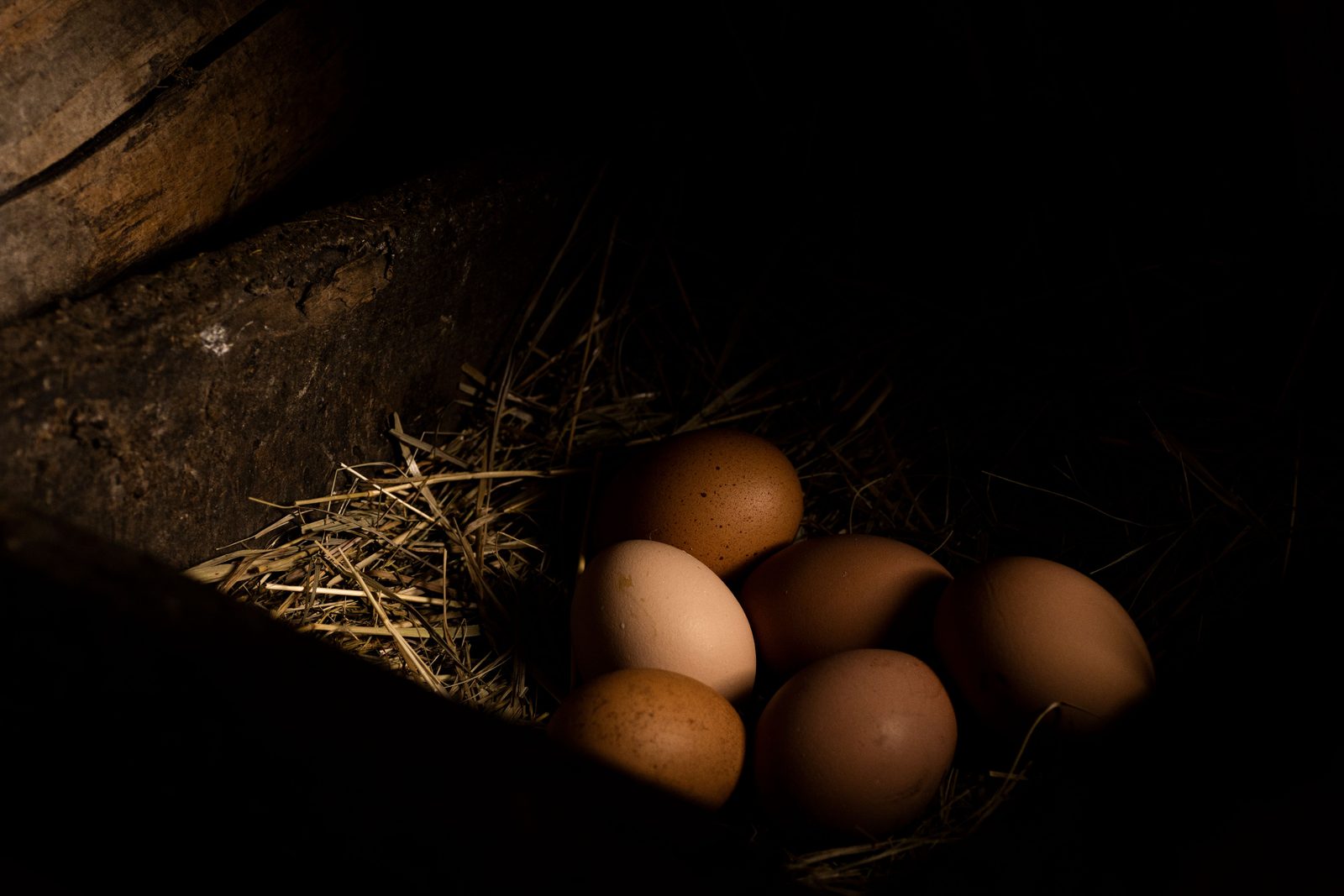
Rats will take eggs. A brown rat can carry an egg away or break it and eat it in place, and a nest box that is suddenly producing nothing is often rats rather than a hen gone off lay.
Chicks and very young birds are genuinely at risk. A rat will kill a day-old chick without difficulty. Adult birds are usually safe, though a large rat will occasionally attack a bird sleeping on a low perch, and bites on feet and combs do happen.
They damage the building
Rats gnaw constantly because their incisors never stop growing. They will go through timber, insulation, plastic feed bins and electrical cable. Cable is the one that matters: gnawed wiring in a coop with a heat lamp or a light is a genuine fire risk, and it is a common enough cause of shed fires to be worth taking seriously.
They burrow, and the burrows undermine things
A rat run under a coop floor or along a foundation removes soil and can undermine a slab or a post. On a small building this is a slow problem rather than an urgent one, but it does not fix itself.
Disease
This is where the internet gets over-excited, so here is the measured version.
Rats carry organisms that can affect both poultry and people. Salmonella is the main one for the flock. Leptospira, spread in rat urine, is the main one for you — it causes leptospirosis, and it is contracted through contact with contaminated water or damp material, particularly through broken skin. It is uncommon, and it is serious when it happens.
Rats can also carry mites and lice into a coop, and can move poultry diseases between properties.
None of this means a rat sighting is a health emergency. It does mean that gloves, hand-washing and not stirring up dry droppings are sensible when you are cleaning a coop that has had rats in it.
Rats or mice?
Worth settling early, because the answer changes what you do.
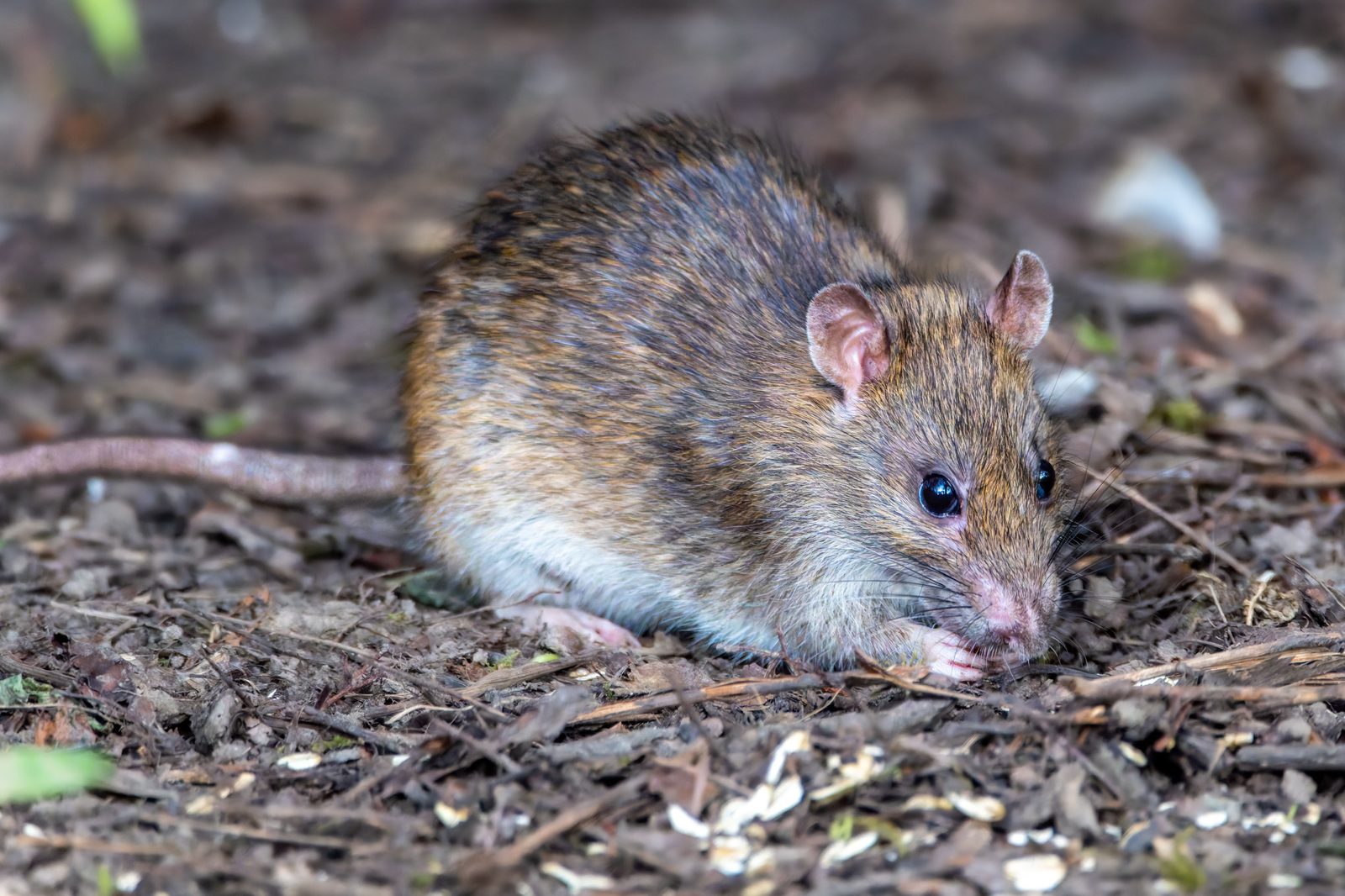
Droppings. Mouse droppings are the size of a grain of rice, 3 to 6 millimetres, pointed at both ends. Rat droppings are 12 to 20 millimetres, about the size of an olive stone, blunter. If you can see them clearly from standing height, they are rat.
Runs. Rats are creatures of habit and use the same route repeatedly, leaving a visible smooth path through grass, and dark greasy smears where they squeeze past a fixed edge. Mice wander more.
Burrows. Brown rats dig. A hole of 50 to 90 millimetres with a fan of loose soil outside it, usually against a wall or under a shed, is rat. Mice do not do this.
Noise. Mice scratch and scurry. Rats thump. If you can hear something moving in the roof of a shed and it sounds heavy, it is heavy.
Mice are a nuisance. Rats are a problem. The methods overlap but the urgency does not.
Working out how bad it is
Rats are nocturnal and cautious, so what you see badly understates what is there. The old rule of thumb — if you see one in daylight there are many — is roughly right, because daytime activity usually means the population has outgrown the night-time food supply.
A better measure than sightings:
Count the burrows. Walk the perimeter of the coop, the run and any nearby buildings, and mark every hole. Then fill each one loosely with soil or crumpled newspaper and check the next morning. The ones reopened are active. Active burrows are the number that matters.
Look for fresh droppings. Sweep an area clean, then check after 24 hours. Fresh droppings are dark and soft; old ones are grey, dry and crumble.
Put down flour. A dusting of flour or talc across a suspected run overnight shows footprints and tail drags by morning, and tells you the direction of travel.
Do this before you start, and again after a fortnight. Otherwise you have no way of knowing whether anything you did worked.
How rats live, and why that decides the method
A little natural history saves a lot of wasted effort, because almost every failed rat campaign fails for a reason that follows from how the animal actually behaves.
They breed faster than you can trap
A brown rat reaches breeding age at about three months. A female produces five to six litters a year, of six to twelve young each. From one pair, with food available and no losses, the arithmetic runs to hundreds within a year.
You cannot out-trap that. What you can do is remove the food, at which point the population cannot support itself and falls on its own. Trapping then clears the remainder. That is the whole strategy, and it is why the order of the steps matters more than the effort put into any one of them.
They are wary of new things
Rats are strongly neophobic. Put a new object into their territory and they will avoid it for days, even a baited trap that smells of food. Mice do not behave like this, which is why mouse advice fails on rats.
Two practical consequences. Pre-baiting is not optional. And moving traps around constantly resets the clock — set them well, leave them, be patient.
They travel by touch, along edges
Rats have poor eyesight and navigate by whiskers and memory, keeping a body in contact with a solid edge. This is why the greasy smear marks appear on fixed corners, and why a trap tight against a wall catches while one a hand's width out does not.
It is also why clearing a strip of open ground around a building works. You have not blocked anything; you have made the route feel wrong.
They are strong and persistent
A brown rat can climb a rough vertical wall, swim for several minutes, jump about a metre horizontally, fall a couple of storeys without injury, and gnaw through lead sheet, breeze block and soft concrete. Timber and plastic barely register.
Assume anything you build will be tested properly.
They live close to the food
A brown rat's home range is small when food is plentiful, often within thirty or forty metres of the source. That is good news: the animals eating your feed almost certainly live on your ground, not the neighbour's, so what you do locally works.
It also means that if numbers do not drop, the food source is close by and you have missed it.
What it costs, either way
Worth setting out, because the effort of doing this properly sounds like a lot until it is compared with the alternative.
Doing nothing. Twenty rats eat roughly half a kilogram of feed a day and spoil several times that. Over a year that is a meaningful share of a small flock's feed bill, before any losses of eggs or chicks, and before any repair to gnawed timber or cable.
Doing it properly. A metal feed bin, a roll of welded mesh, half a dozen snap traps and a couple of trap boxes. It is a modest one-off cost, most of it lasting for years, and the ongoing requirement is a habit rather than a spend.
A pest controller. Several visits, and if bait is used the underlying cause is untouched, so it recurs.
The expensive option is the one where nothing changes.
The thing that actually matters: the food
Everything else in this guide is secondary to this section. You can trap for months and achieve nothing while the feeder is out overnight, because the population rebuilds as fast as you remove it. Rats breed at a rate that outpaces any trapping you will do by hand.
Take the feed in at night
The simplest and most effective single change. Chickens do not eat in the dark. Feed left out overnight feeds only rats.
Take the feeder into a sealed bin, or into the house, at dusk. Put it out at first light. That one habit does more than every trap you will ever set.
If that is impractical, the alternative is a feeder rats cannot open.
Treadle feeders
A treadle feeder has a lid held shut by a counterweight, opened by the bird's own weight standing on a step. Set correctly, a chicken opens it and a rat does not.
They work, with two conditions. The counterweight must be set heavy enough to exclude a rat — a large brown rat weighs 300 to 500 grams and some feeders will open at that. And birds need a week or two of training with the lid propped open before it is set live, or they simply stop eating.
Cheap ones with a light lid, or a gap under the lid, are worse than nothing because they give you false confidence.
Stop the spillage
Chickens are wasteful eaters and flick feed out of open troughs. Spilled grain on the floor is the single largest food source in most coops.
Use a feeder with a lip or a rain hat that stops birds beaking feed out sideways. Raise it to the height of the birds' backs so they cannot stand in it. Sweep up what does spill.
Store the sacks properly
A rat goes through a paper or woven plastic feed sack in minutes. Feed belongs in a metal bin with a fitted lid, or a heavy plastic one inside a rat-proofed store. Galvanised dustbins are cheap and work.
The same applies to scratch grain, mealworms, and anything else palatable in the same shed.
The rest of the food
Kitchen scraps thrown into a run are a rat magnet. If you feed scraps, give only what the birds will finish in twenty minutes and remove the rest.
Compost heaps next to a coop feed rats generously. Either move the heap well away, or switch to a closed rodent-proof composter, and never put cooked food or meat into an open heap near poultry.
Bird feeders for wild birds, within thirty metres of the coop, are effectively a rat feeding station. Move them or stop them while you are dealing with an infestation.
Fallen fruit under trees, spilled pet food, and grain stored for other stock all count.
Water
Less discussed and still relevant. Rats need water daily and will use the poultry drinker. Taking the drinker in at night helps, though it matters much less than the feed, and in hot weather birds may need overnight access. Fix the food first.
Taking away the shelter
Rats will not cross open ground willingly. They travel along edges — walls, fences, hedge bottoms, the space behind a stack of pallets — because it is safer.
Clear a strip. Half a metre of bare, mown or gravelled ground around the coop makes the approach exposed and genuinely reduces traffic.
Move the harbourage. Woodpiles, pallet stacks, old machinery, piles of sacks, long grass against the shed wall. Rats nest in all of it. Log piles are the classic one: stack firewood off the ground and away from the coop.
Deal with the space under the coop. A raised coop is good for ventilation and terrible if the gap underneath is dark and enclosed. Either raise it high enough that the space is open and light — 40 centimetres or more, so a cat or a terrier can get under — or block it off entirely with buried mesh.
Cut back the hedge bottom where it runs to the coop. That is a motorway.
Making the coop itself rat-proof
This is where most people's efforts fail, because of one material.
Chicken wire does not stop rats
Chicken wire is a light hexagonal netting designed to stop a chicken walking through a gap. A rat goes through it, and a determined one will gnaw the wire itself. It is also no defence against a fox or a mink.
The material you want is welded mesh, sold as hardware cloth. For rats, 12 millimetre — half an inch — is the standard. That excludes adult rats and most juveniles. Six millimetre also excludes mice, at more cost and less airflow.
Use it on ventilation openings, windows, and any gap larger than a coin.
Know the size of gap that matters
A young rat gets through a gap of about 20 millimetres. Anywhere you could push a thumb through, a rat can use.
Go round the coop slowly, on a bright day, from the inside with the door shut, and look for daylight. Every point of light is a hole. Pay attention to the joints between panels, where the roof meets the walls, around pop-holes, and where any pipe or cable enters.
Close the holes properly
Expanding foam alone is useless — rats chew straight through it. Stuff the gap with wire wool or fine welded mesh first, then foam or seal over it. Metal plates over gnawed timber edges work well. Cement mortar for holes in masonry.
The floor
An earth floor is the usual way in. Options, in order of effort:
Lay 12 millimetre welded mesh across the whole floor area before you put bedding down, turned up 15 centimetres at the edges and fixed to the frame.
Or bury a mesh skirt: dig a trench 30 centimetres deep around the coop, run mesh down and then outwards at right angles for 30 centimetres, and backfill. Rats dig down at the wall, hit the horizontal apron and generally give up.
Or put the coop on a concrete or paving slab base. Most effective, most work.
The run
Rat-proofing an entire run is usually not worth it, and it is not really necessary — daytime activity in the run is manageable if the coop and the feed are secure. Concentrate the effort where the birds sleep and where the food is.
Rat-proofing a coop you are still building
Far easier than retrofitting, and worth the detour if you have not built yet.
Put it on a hard base. A concrete pad or paving slabs, with the coop sitting on top, removes the burrowing route entirely and makes the whole thing easier to clean. If that is too much, lay welded mesh over the footprint before you build and turn it up the inside of the walls.
Raise it, or sit it down. The two safe options are a coop flat on a hard base, or one raised high enough that the underneath is open and bright — 40 centimetres clear or more. The dangerous version is the one raised 10 or 15 centimetres, which creates a dark protected void that is ideal for nesting and impossible to reach into.
Mesh every opening as you go. Vents, windows and the gap under the eaves, all in 12 millimetre welded mesh, fixed with screws and washers rather than staples. Staples pull out; a rat will find the one that has.
Line the inside of the walls to a height of 30 centimetres with mesh or sheet metal if you are using thin cladding. That is the height at which gnawing happens.
Run cable in conduit. Any wiring for lights or heaters goes inside metal or rigid plastic conduit, not stapled bare to a joist.
Plan where the feed lives before you build, not after. A small lockable feed store with a hard floor, attached but separate, solves half the problem permanently.
Neighbours, and the wider ground
Rats do not respect a boundary, and the most thorough job on your own plot can be undone by what is over the fence.
If the source is next door — a neglected compost heap, an unsecured feed store, an aviary, a duck pond fed with bread — then your trapping is emptying a bucket with the tap running. It is worth an awkward conversation, because the alternative is trapping indefinitely.
Approach it as a shared problem rather than an accusation. Rats travelling between two properties are a nuisance to both, and most people would rather know. Where several neighbours act at once the result is far better than any one of them acting alone, because the local population is dealt with rather than moved.
If a neighbouring property is genuinely derelict and the owner will not act, the local authority normally has powers over rodent infestations, and reporting it is reasonable rather than hostile.
Two other sources worth checking on your own ground before you blame anyone: a poorly fitting drain or manhole cover, which gives access straight from the sewer, and a stack of anything that has sat undisturbed for more than a season.
Trapping
Once the food is cut off and the coop is sealed, trapping deals with the animals already there. In that order. Trapping first is the common mistake, and it wastes weeks.
Snap traps
The traditional rat trap, and still the best tool. Quick, cheap, and it kills outright when it is the right size and set correctly. Use rat traps, not mouse traps — a mouse trap injures a rat rather than killing it.
Placement is most of the job. Rats run along edges, so traps go tight against a wall, at right angles to it, with the trigger end towards the wall. A trap in the middle of a floor catches nothing.
Bait. Peanut butter is the standard because it is aromatic and hard to steal. Chocolate spread, bacon and dried fruit all work. Tie or smear it so the bait cannot be lifted cleanly.
Pre-bait. Rats are neophobic — genuinely wary of anything new in their environment, far more so than mice. Set the traps out unset and baited for three or four nights, let the rats feed freely, and only then set them. Catch rates go up sharply. Skipping this is why people report "the rats won't go near the traps".
Protect the traps from the birds. A set rat trap will injure a chicken badly. Every trap must be inside a box the birds cannot reach into — a purpose-made trap box, a length of drainpipe, a paving slab tunnel, or a wooden box with a rat-sized entrance. This is not optional if the traps are anywhere the flock can go.
Check them daily. Every morning without exception.
Bucket traps
A bucket part-filled with water, a rolling bar or a tipping platform across the top baited in the middle, and a ramp. The rat walks out, the platform turns, and it falls in.
They catch several in a night, which snap traps cannot. They are also a drowning trap, which many people are not comfortable with, and in some places causing unnecessary suffering to a vertebrate is a legal matter — check where you are. A dry version with a deep smooth-sided bin, checked at first light and the catch dispatched humanely, avoids the objection.
Live traps
Sound humane and usually are not. A trapped rat released elsewhere is dropped into another colony's territory without shelter, and largely does not survive. In several countries it is also illegal to release a brown rat, as a non-native species. If you use a live trap you still have to dispatch the animal, so you have gained little over a snap trap.
Glue boards
Do not. They cause prolonged suffering, they catch birds and hedgehogs, and their sale or use is now restricted or banned in a number of places. There is no situation on a homestead where they are the right tool.
Why poison is the wrong answer here
Rodenticide is the first thing many people reach for and it is a poor fit for a homestead, for reasons worth spelling out.
Secondary poisoning. Anticoagulant baits take days to kill. In that time the rat is slow, exposed and easily caught — by your cat, your dog, or by the owls, buzzards and kestrels that are otherwise doing free rat control for you. They then get the dose. Residues from these compounds are found in a large majority of predatory birds tested, and that is not an abstract harm.
Your own animals. Dogs in particular will find and eat bait, or eat a poisoned rat. It is a common and avoidable emergency.
Your food chain. Bait near poultry, near eggs you eat, near feed stores. The risk is small if it is done properly and it is not zero, and getting it wrong is not recoverable.
Dead rats in the walls. A poisoned rat dies wherever it happens to be, often inside a structure. The smell lasts weeks.
It does not solve anything. Poison reduces numbers while the food source remains. Take the bait away and the population returns.
The law. Professional-strength rodenticides increasingly require certification, and amateur products carry conditions about bait stations and searching for bodies that most people do not follow.
If a professional pest controller judges bait necessary for a severe infestation, that is their call and they carry the responsibility. As a routine tool around a chicken coop, it is the wrong choice.
Animals that help, and animals that do not
Terriers genuinely work. A working terrier around a yard kills rats and, more usefully, makes the whole area feel dangerous to them. This is real control, not folklore.
Cats vary enormously. A good working farm cat is effective against mice and young rats; many house cats will not take on an adult brown rat, which is a formidable animal. Keeping a cat solely for rat control is not a plan, but a cat that already lives there helps.
Owls and raptors take a serious number of rodents. Putting up a barn owl box is a slow, cheap and genuinely useful measure — and it is the strongest practical argument against poison, since the two are incompatible.
Chickens themselves will kill and eat a mouse and occasionally a young rat. Do not rely on it.
Ultrasonic repellers do not work. This is well established in trials. Rodents habituate within days. Save your money.
Peppermint oil, mothballs and similar do not work either at any dose you would use around livestock.
Rats and the birds themselves
A question that comes up constantly, and deserves a straight answer rather than either reassurance or alarm.
Adult chickens are rarely harmed. A healthy adult bird on a perch is not prey for a rat in any normal sense. Chickens are large, awake early, and will peck at a rat that comes too close. Coexistence, unpleasant as it is, is the usual state.
Chicks and young birds are at real risk. Anything under a few weeks old, and anything brooding on the ground, is vulnerable. A broody hen sitting on eggs at floor level is a common loss. If you are hatching or brooding, the rat problem stops being a nuisance and becomes urgent.
Injuries do happen. Bites to feet, toes and combs on birds sleeping on low perches are occasionally seen. Raising the perches well off the floor helps.
Stress and laying. Birds disturbed at night by rats moving through the coop sleep badly, and it shows in laying. A flock that has gone quiet and off lay for no obvious reason is sometimes being kept awake.
What the birds tell you. Chickens reluctant to go in at dusk, or clustered at one end of the coop, are often reacting to something using the other end. It is worth listening to.
Cleaning up afterwards
Once the rats are gone the coop needs dealing with, and this is the part where the health advice actually applies.
Do not sweep dry. Dry droppings and nest material turn into airborne dust, and that dust is how the organisms reach you. Dampen everything first with a garden sprayer.
Wear gloves, and wash hands thoroughly afterwards whether or not you did. Cover any cut on your hands before you start.
Bag the bedding and burn or bin it. Do not compost bedding from a coop that has had a rat infestation.
Wash down with a poultry-safe disinfectant, and let it dry properly before the birds go back.
Fill the burrows once you are confident they are inactive, and keep checking them for a few weeks. A reopened burrow is the earliest warning you will get.
What to expect, and when
Week one. Cut the food off and seal the coop. Nothing appears to improve, and the rats may become more visible as they search harder. This is normal and it is a good sign rather than a bad one.
Weeks two and three. Pre-bait, then set the traps. This is when the catch happens. Expect most of the total in the first few nights of setting.
Week four. Catches fall away. Re-do the burrow count and the dropping check from the start of this guide and compare properly with your first figures.
After that. Keep the feed habits. That is the whole of the maintenance. Reset a couple of traps whenever you see fresh signs.
If numbers have not clearly fallen after a month of doing all of it, there is a food source you have not found. Look again at neighbouring properties, wild bird feeding, and compost.
Winter
Rat pressure rises sharply in autumn as field food runs out and the weather turns, and a coop that was fine all summer suddenly has a problem in October.
Do the sealing work in late summer rather than in response to a winter infestation. Take extra care with feed storage from September. Expect to trap in autumn even if you did not need to in June.
When to bring somebody in
Call a professional if you are seeing rats in daylight regularly, if there are more than a handful of active burrows, if they are inside your house rather than the outbuildings, or if you have worked through everything here for a month with no change.
Tell them you keep poultry and that you do not want anticoagulant bait used in the open. A good one will work with that.
Common questions
Will getting rid of the chickens get rid of the rats? Not quickly. Rats will move to the next food source rather than leave, and if that is your compost heap or your shed they simply relocate. Removing the feed has the same effect without giving up the birds.
Can I use the deep litter method with a rat problem? Deep litter is a thick layer of bedding left to compost in place, and it is warm, dry and undisturbed — everything a rat wants. It is not impossible to run alongside rat control, but the floor beneath it must be sealed properly first, because you cannot see what is happening underneath.
Do rats eat chicken droppings? They will, and undigested grain in the droppings is part of what keeps a population going. It is another argument for a feeder that stops birds flicking whole grain about.
Is one rat a problem? One seen is not one present. Rats are social and live in groups; a single animal in the open usually means a colony under pressure. Treat a first sighting as the start, not an isolated event.
Will a rat kill a chicken? Rarely an adult. Reliably a chick.
Should I block the burrows straight away? Not until you have counted them and used them to judge activity — they are your best measure. Block them once catches have stopped, and watch for them being reopened.
Do rats come back? Yes, if the food comes back. The sealing work lasts for years. The feed habit has to last forever, and it is the only thing that has to.
How long before I see a difference? Signs should fall clearly within a month of doing all of it. If they have not, something is still feeding them.
Mistakes worth avoiding
Trapping before removing the food. The commonest mistake, and it wastes weeks.
Using chicken wire. It stops chickens, not rats.
Setting traps unprotected in the run. You will injure a bird.
Skipping the pre-bait. Rats avoid new objects; give them three nights to accept the trap.
Reaching for poison first. It kills the owls and the neighbour's cat as readily as the rats, and it does not fix the cause.
Leaving the compost heap where it is. An open heap beside a coop undoes everything else.
Judging progress by sightings. Count burrows and droppings instead. Sightings are a terrible measure.
The short version
Rats come for the feed. Take the feeder in at night or fit a properly weighted treadle feeder, keep the sacks in a metal bin, sweep up spillage, and move the compost and the wild bird feeders away.
Then seal the coop with 12 millimetre welded mesh — not chicken wire — closing every gap you could push a thumb through, and mesh or slab the floor.
Only then trap. Snap traps against a wall, inside boxes the birds cannot reach, pre-baited unset for three nights before you set them.
Leave the poison alone. It kills the owls and terriers that are helping you, and it does nothing about the reason the rats came.